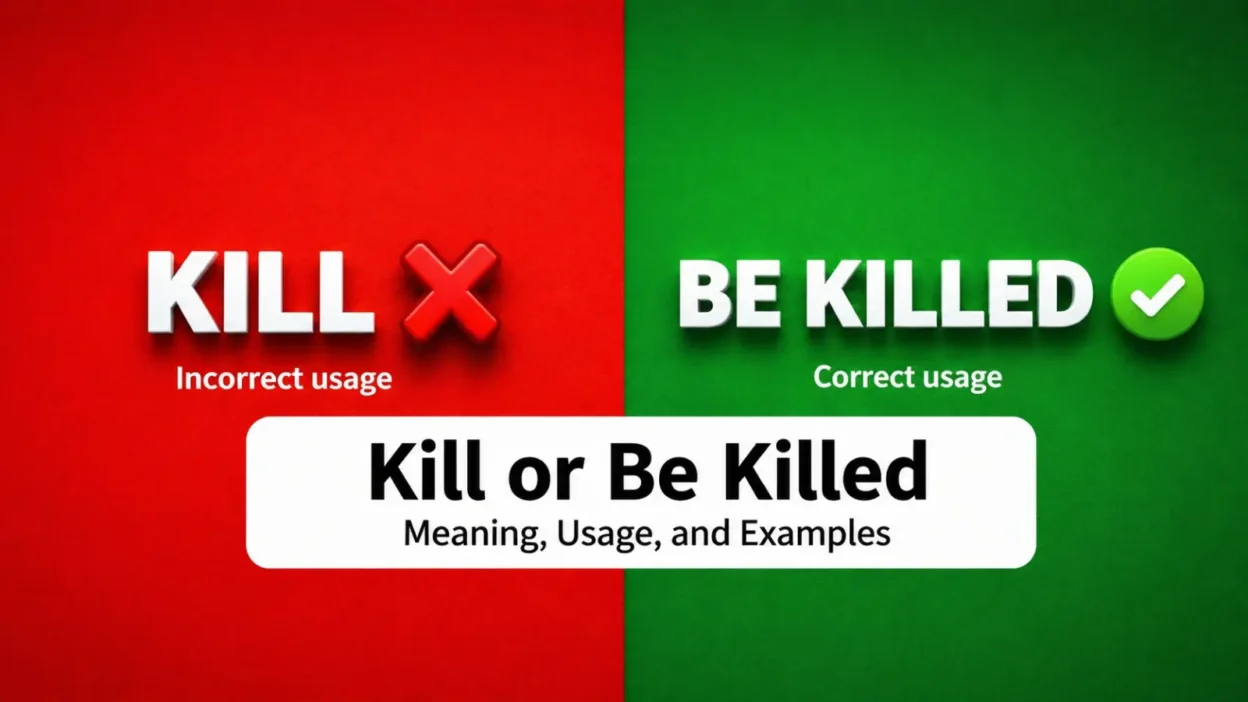
“Kill or be killed” is a powerful English phrase that describes a situation in which someone must act to survive, win, or avoid complete defeat.
Sometimes, the phrase carries a literal meaning because real danger or death is involved. More often, however, people use it figuratively to describe extreme pressure, fierce competition, or a ruthless environment.
Because the expression sounds intense and aggressive, it does not suit every situation. Understanding its meaning, tone, and grammar will help you use it naturally and appropriately.
Quick Answer
“Kill or be killed” means that someone must act quickly or forcefully to survive, succeed, or avoid serious defeat.
The phrase can describe real danger, but it often refers to fierce competition in business, sports, gaming, or other high-pressure situations. Since it sounds dramatic and violent, avoid using it for minor problems or polite communication.
TL;DR
- “Kill or be killed” is a fixed English phrase.
- It can refer to literal danger, such as war or physical conflict.
- It can also describe figurative pressure in business, sports, games, or competition.
- The expression sounds intense, aggressive, and dramatic.
- Softer language usually works better in formal or polite writing.
- Add hyphens when the phrase comes before a noun: a kill-or-be-killed mindset.
What Does “Kill or Be Killed” Mean?
The phrase presents two extreme outcomes:
You act and survive, or you hesitate and lose.
Therefore, it suggests that the situation offers no safe middle ground. Someone must fight, compete, or respond forcefully because failure could bring serious consequences.
Definition in Plain English
In plain English, “kill or be killed” means:
You must fight, act, or compete aggressively because losing could seriously harm you or end your chance of success.
The word “kill” does not always refer to physical death. In figurative situations, it can mean:
- defeat
- overpower
- eliminate
- outcompete
- destroy someone’s chances
For example, a business owner may describe a competitive market as “kill or be killed.” In that sentence, no physical violence occurs. Instead, the phrase shows how difficult survival feels within the industry.
Literal Meaning
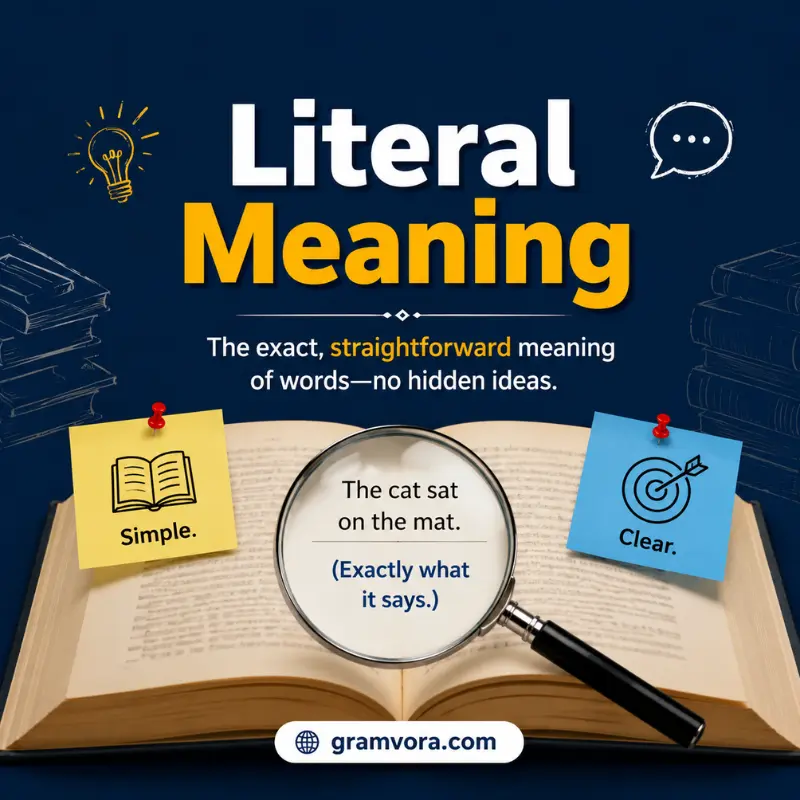
The literal meaning applies when someone faces real physical danger, violence, or possible death.
For example:
- On the battlefield, the soldiers faced a kill-or-be-killed situation.
- The trapped animal entered a kill-or-be-killed struggle.
- The movie showed a genuine kill-or-be-killed moment.
- During the attack, the character believed it was kill or be killed.
This meaning commonly appears in war stories, survival narratives, violent conflicts, and descriptions of predator-prey encounters.
Because the literal meaning involves serious harm, writers should use it carefully.
Figurative Meaning
People often use “kill or be killed” figuratively. In these cases, the phrase describes severe pressure or ruthless competition rather than actual violence.
For example:
- In that market, small businesses felt it was kill or be killed.
- The final round created a kill-or-be-killed atmosphere.
- Some players approach every match as though it were kill or be killed.
- The company encouraged a kill-or-be-killed attitude among its sales staff.
Here, the expression means that people feel they must defeat their competitors before those competitors defeat them.
Although this usage does not describe physical danger, it still creates a harsh and dramatic tone.
Part of Speech and Sentence Structure
“Kill or be killed” works as a fixed phrase. It often follows linking verbs such as:
- is
- was
- feels
- seems
- became
Examples:
- It was kill or be killed.
- The competition became kill or be killed.
- At that moment, the situation felt like kill or be killed.
- For the characters, every day was kill or be killed.
When to Use Hyphens
Use hyphens when the complete phrase appears before a noun and describes it.
- a kill-or-be-killed mindset
- a kill-or-be-killed culture
- a kill-or-be-killed attitude
- a kill-or-be-killed environment
- a kill-or-be-killed game
However, do not add hyphens when the phrase stands alone.
Correct:
- The battle became kill or be killed.
Correct:
- They adopted a kill-or-be-killed strategy.
How to Use “Kill or Be Killed”
Use the phrase when you want to emphasize extreme danger, urgency, or competition.
| Context | Example | Why It Works |
|---|---|---|
| War or combat | “It was kill or be killed.” | Real physical danger exists. |
| Business competition | “The market felt kill or be killed.” | The phrase shows ruthless competition. |
| Sports | “The final quarter became kill or be killed.” | It emphasizes intense pressure. |
| Gaming | “The last level had a kill-or-be-killed pace.” | It matches dramatic action and high stakes. |
| Fiction | “The characters live in a kill-or-be-killed world.” | It describes a dangerous environment. |
| Minor daily problems | Avoid the phrase. | It usually sounds exaggerated. |
In general, the phrase works best when the consequences feel severe. Otherwise, it may sound unnecessarily aggressive.
When to Use It
Use “kill or be killed” when you want to communicate:
- immediate danger
- fierce competition
- survival pressure
- extreme urgency
- a ruthless attitude
- a dramatic choice
- an all-or-nothing situation
The phrase often appears in:
- novels
- films
- sports commentary
- gaming discussions
- opinion writing
- business commentary
- survival stories
For example, a sports writer might say:
- The championship entered a kill-or-be-killed phase.
Similarly, a business commentator might write:
- New companies often struggle in the industry’s kill-or-be-killed culture.
When Not to Use It
Avoid the phrase when the situation feels minor, polite, calm, or routine.
Too Dramatic
- I missed the bus. It is kill or be killed.
- I forgot my charger. Now it is kill or be killed.
- Our lunch order became kill or be killed.
- I need to answer three emails. It is kill or be killed.
These sentences exaggerate ordinary inconveniences.
Better Alternatives
- I missed the bus, so I need another way to get there.
- I forgot my charger, so I need to borrow one.
- Everyone had strong opinions about the lunch order.
- I have several urgent emails to answer.
The phrase can also sound inappropriate in professional communication.
Too aggressive:
- We need a kill-or-be-killed plan for this client.
Better:
- We need a strong strategy to remain competitive.
The second version communicates urgency without creating a violent or hostile tone.
Examples of “Kill or Be Killed” in Sentences
Literal Examples
- The soldiers knew they had entered a kill-or-be-killed situation.
- In the survival film, the main character faces a kill-or-be-killed choice.
- The predator-prey scene showed nature at its most brutal: kill or be killed.
- The ambush forced the group into a kill-or-be-killed struggle.
- For the trapped characters, every decision involved life or death.
Figurative Examples
- The startup world can sometimes feel like kill or be killed.
- The championship game developed a kill-or-be-killed intensity.
- In that office, the competitive culture felt almost kill or be killed.
- The debate focused less on ideas and more on a kill-or-be-killed mentality.
- Some executives believe business requires a kill-or-be-killed approach.
- The final stage of the competition left no room for hesitation.
Hyphenated Examples
- The company promoted a kill-or-be-killed approach to sales.
- The coach rejected the team’s kill-or-be-killed attitude.
- The novel takes place in a kill-or-be-killed world.
- Constant pressure created a kill-or-be-killed culture.
- His kill-or-be-killed mindset damaged relationships within the team.
Tone and Connotation
“Kill or be killed” carries a strongly negative and aggressive connotation.
It can suggest:
- hostility
- fear
- desperation
- brutality
- selfishness
- extreme competition
However, the exact tone depends on the context.
In an action movie, the phrase may sound exciting or suspenseful. In a workplace, by contrast, it may suggest a toxic culture. Meanwhile, in sports commentary, it often emphasizes urgency rather than actual aggression.
Therefore, always consider your audience and purpose before using it.
Common Mistakes
1. Using It for Small Problems
Incorrect or exaggerated:
- I lost my pencil. It is kill or be killed.
Better:
- I lost my pencil, so I need to find another one.
The original phrase makes a minor problem sound dangerously serious.
2. Assuming It Always Refers to Real Violence
“Kill or be killed” can describe literal danger, but people also use it figuratively.
For example:
- The industry has become kill or be killed.
In this sentence, the speaker means that competition has become severe. No one faces physical violence.
3. Using It in Polite Business Writing
Too aggressive:
- We need a kill-or-be-killed strategy for this customer.
Better:
- We need a competitive strategy for this customer.
The softer version sounds more professional and cooperative.
4. Forgetting Hyphens Before a Noun
Correct:
- a kill-or-be-killed mindset
Less polished:
- a kill or be killed mindset
Because the full phrase describes “mindset,” hyphens connect the words into one compound modifier.
5. Adding Hyphens When the Phrase Stands Alone
Incorrect:
- The situation was kill-or-be-killed.
Better:
- The situation was kill or be killed.
Use hyphens only when the phrase directly comes before a noun.
Softer Alternatives
When “kill or be killed” sounds too violent, choose a milder expression.
Useful alternatives include:
- high-stakes
- highly competitive
- do-or-die
- survival mode
- win-or-lose
- intense pressure
- ruthless competition
- no room for error
- all-or-nothing
- fiercely competitive
Examples:
- The market is highly competitive.
- The team faces intense pressure.
- This is a high-stakes decision.
- The company has entered survival mode.
- The final match became an all-or-nothing contest.
- The industry leaves little room for error.
These options communicate pressure without introducing violent imagery.
The phrase “kill or be killed” focuses on conflict with an opponent. It suggests that one side must defeat the other to survive or succeed.
By contrast, “do or die” highlights a final effort made under extreme pressure. It means someone must act immediately because failure could end the opportunity.
Examples:
- The rival companies followed a kill-or-be-killed strategy.
- The team entered the final match with a do-or-die attitude.
Overall, “do or die” usually sounds less hostile, although it still creates a dramatic and urgent tone.
Examples:
- The rivals followed a kill-or-be-killed strategy.
- The team entered the final game with a do-or-die attitude.
As a result, “do or die” may sound slightly less hostile, although it still sounds dramatic.
Frequently Asked Questions
What does “kill or be killed” mean?
“Kill or be killed” means that someone must act, fight, or compete forcefully to survive or avoid serious defeat. The phrase can describe real physical danger or figurative competition.
Is “kill or be killed” literal?
Sometimes it is literal. For instance, it may describe war, combat, animal survival, or direct physical danger. However, people often use it figuratively for business, sports, gaming, and other competitive environments.
Is “kill or be killed” an idiom?
Yes. It functions as an idiomatic fixed phrase because speakers often use it to describe extreme competition rather than actual killing.
Is “kill or be killed” rude?
The phrase is not automatically rude, but it sounds aggressive, violent, and dramatic. Therefore, it may offend or unsettle some audiences, especially in calm or professional settings.
Can I use it in formal writing?
You can use it in formal analysis, quotations, literary criticism, or descriptions of conflict. However, softer phrases such as “high-stakes,” “fiercely competitive,” or “ruthless competition” usually work better in professional communication.
Should I write “kill or be killed” or “kill-or-be-killed”?
Write kill or be killed when the phrase stands alone:
- The situation became kill or be killed.
Use kill-or-be-killed before a noun:
- They developed a kill-or-be-killed mindset.
Mini Quiz
1. Choose the more natural sentence.
A. I lost my pencil. It was kill or be killed.
B. The final battle was kill or be killed.
Answer: B
The final battle involves serious danger, so the phrase fits the context.
2. Choose the correctly hyphenated sentence.
A. The company faced intense competition in a kill-or-be-killed market.
B. The company faced intense competition in a kill or be killed market.
Answer: A
The phrase comes before the noun “market,” so it needs hyphens.
3. Choose the correct statement.
A. The phrase always means real death.
B. The phrase can carry a literal or figurative meaning.
Answer: B
People use the expression for both genuine danger and severe competition.
Conclusion
“Kill or be killed” describes a situation in which someone must act forcefully to survive, succeed, or avoid serious defeat. Although the phrase can refer to real danger, people often use it figuratively for fierce competition in business, sports, gaming, and fiction.
Because it creates an aggressive and dramatic tone, reserve it for situations with genuinely high stakes. In professional, polite, or everyday communication, alternatives such as “highly competitive,” “intense pressure,” or “no room for error” will usually sound clearer and more appropriate.
Finally, remember the punctuation rule: write kill or be killed when the phrase stands alone, but use kill-or-be-killed when it appears before a noun.