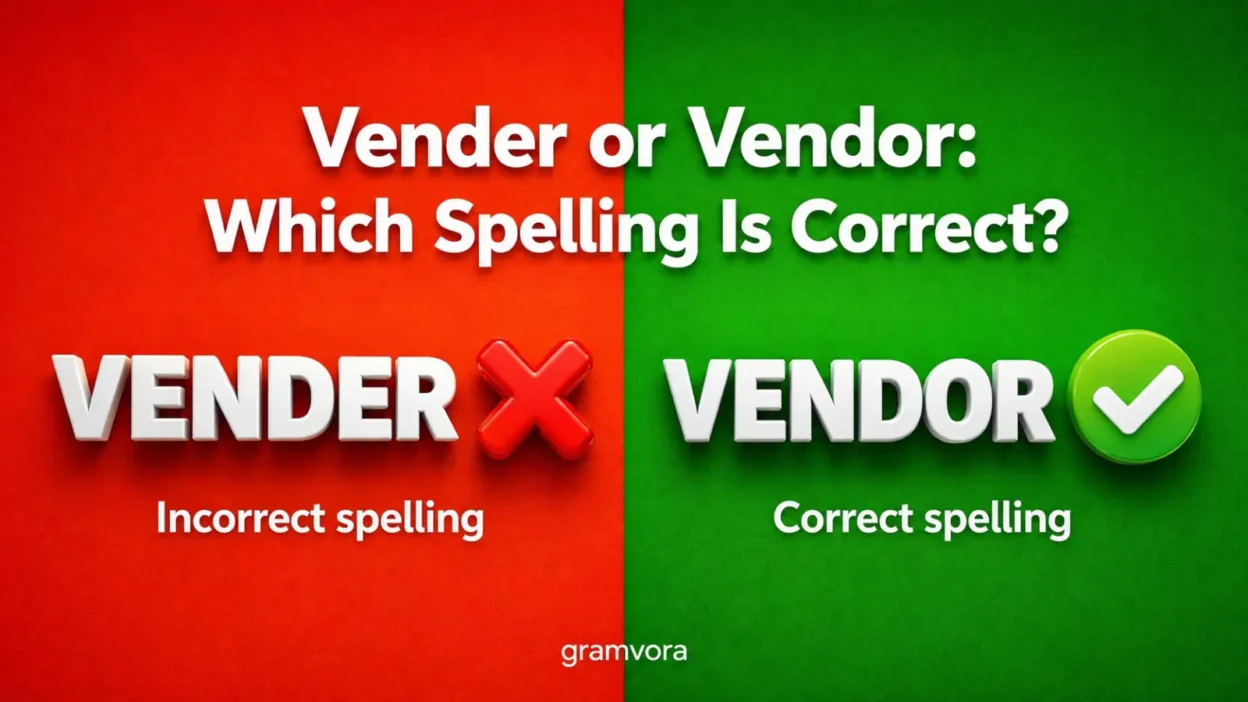
The correct choice for modern US English is vendor.
Use vendor when you mean a person, company, or business that sells goods or services. Vender is a real spelling variant, but it is rare today. In most modern writing, it looks old-fashioned, unusual, or simply like a typo.
So the safe answer is simple: write vendor, not vender, unless you are copying a source that already uses vender.
Quick Answer
Vendor is the standard spelling in everyday US English.
Vender can mean the same thing, but it is not the usual modern spelling. Some dictionaries record it as a variant, especially in commerce or legal contexts, but it is not the spelling most readers expect.
Write:
Correct: The company chose a new software vendor.
Avoid: The company chose a new software vender.
For emails, contracts, invoices, event forms, procurement notes, and business writing, vendor is the better choice.
Why People Confuse Them
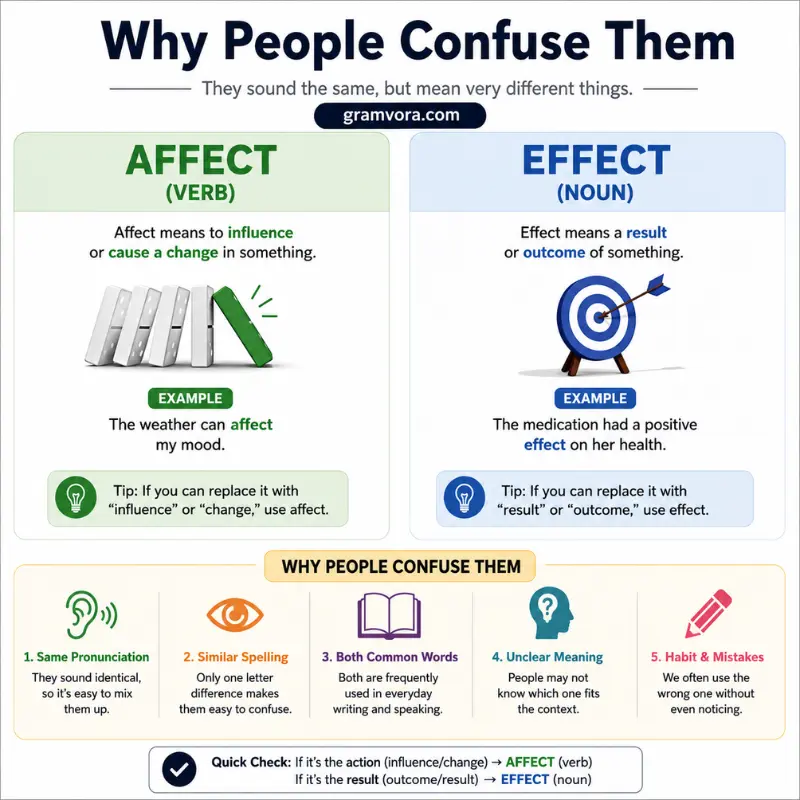
The confusion makes sense. English has many nouns for people that end in -er, such as teacher, builder, buyer, and seller. Since a vendor sells things, vender looks like it should follow that pattern.
But English spelling does not always follow one pattern. In modern use, the standard spelling settled on vendor with -or.
Another reason people mix them up is the verb vend, which means “to sell.” A person who vends something could look like a vender by spelling logic. Still, standard modern writing uses vendor.
Key Differences At A Glance

| Context | Best Choice | Why |
| Modern US English | vendor | Standard spelling readers expect |
| Business writing | vendor | Common in contracts, invoices, and workplace writing |
| Legal or formal documents | vendor | Standard modern form, though vender may appear as a variant |
| Older or quoted text | vender | Keep it only if the original source uses it |
| UK English | vendor | Also the normal modern spelling |
| Everyday speech and writing | vendor | Clear, familiar, and natural |
Are They the Same Word?
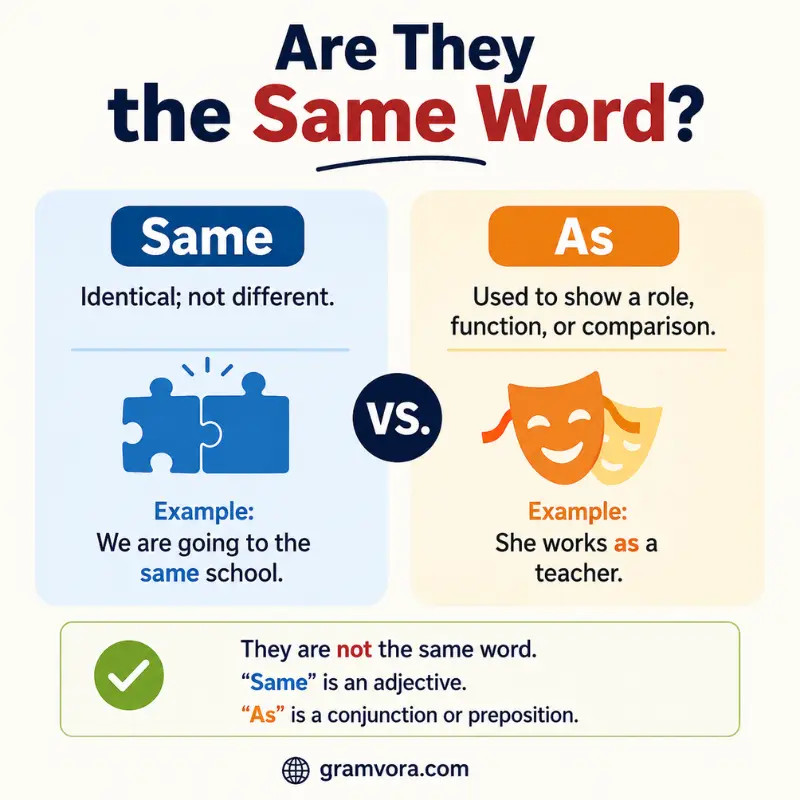
Yes. Vender and vendor refer to the same basic word: a seller.
The usual meaning is a person or company that sells something. A street vendor sells food or goods. A software vendor sells software or related services. A vendor in a contract is the party selling something.
There is no useful modern meaning difference between vender and vendor for everyday US writing. The difference is spelling preference and reader expectation.
A compact comparison:
• Vendor: standard modern spelling
• Vender: rare variant spelling
• Meaning: same basic meaning, “seller”
• Best everyday choice: vendor
• Best professional choice: vendor
US vs UK Preference
This is not like color vs colour. There is no strong modern split where US English prefers one spelling and UK English prefers the other.
Both US and UK readers normally expect vendor.
That matters because some spelling pairs have a regional answer. This one usually does not. Vender is not the normal British spelling of vendor. It is simply a rare variant that may appear in some records, older material, or special contexts.
For a US audience, the rule is even clearer: use vendor.
Which Spelling Should You Use?
Use vendor almost every time.
Choose vendor in:
business emails
purchase orders
contracts
vendor forms
event planning
food service writing
software and service agreements
school or workplace writing
Examples:
The event has three food vendors.
Please send the invoice to our approved vendor.
The vendor will provide support for one year.
We need a backup vendor before the launch.
Use vender only when there is a clear reason, such as quoting a document that uses that spelling or discussing the spelling itself.
When One Spelling Looks Wrong
In modern US writing, vender often looks wrong even though it appears in some dictionaries.
That is the key point. A spelling can exist and still be the wrong choice for normal modern use.
If you write vender in a workplace email, many readers may pause. Some may assume it is a typo. In a contract or invoice, it may look less polished because the expected spelling is vendor.
Vendor, on the other hand, looks natural in both casual and formal settings.
Common Mistakes (and Quick Fixes)
Writing vender agreement is a common spelling mistake. The correct form is vendor agreement.
You may also see approved vender list, but standard English uses approved vendor list.
Some writers assume vender is the UK spelling. However, vendor is the standard modern spelling in both US and UK English.
Another mistake is treating vender and vendor as two different jobs. They refer to the same seller role; the main difference is spelling.
Because the verb is vend, some people naturally write vender. Still, the standard noun used in modern English is vendor.
Everyday Examples
Near the stadium, the city added several new food vendors.
In March, we switched to a new payroll vendor.
Before receiving payment, each vendor must submit a tax form.
For the wedding, the planner sent everyone the vendor schedule.
Our IT team contacted the software vendor for technical help.
At the farmers market, each vendor receives a numbered booth.
Less natural today: The city added more food venders near the stadium.
Less natural today: We switched to a new payroll vender in March.
The second set is understandable, but it is not the spelling most US readers expect.
Dictionary-Style Word Details
Verb
Vender: Not commonly used as a verb in standard US English. The related verb is vend, as in “machines that vend snacks,” though that sounds formal or technical.
Vendor: Not commonly used as a verb in standard US English. It is mainly a noun.
Noun
Vender: A rare variant noun meaning a seller. It may appear in older writing, some dictionary entries, or quoted material.
Vendor: The standard noun meaning a person, company, or party that sells goods, services, or property.
Synonyms
Vender: Same word, rare spelling. Closest plain alternatives: seller, dealer, merchant, supplier, retailer.
Vendor: Closest plain alternatives: seller, dealer, merchant, supplier, retailer.
Antonyms are limited because vendor names a role in a sale. The clearest opposite in a sale is buyer or purchaser.
Example Sentences
Vender: The old notice used the spelling vender, but the updated form says vendor.
Vender: Keep vender only if you are quoting the original wording.
Vendor: The school hired a food vendor for the fundraiser.
Vendor: Our company reviews every vendor before signing a contract.
Word History
Vender: This spelling reflects the same selling idea behind vend, but it is not the spelling most modern readers expect.
Vendor: This became the standard spelling for the noun in modern English. It is the form used in ordinary business, legal, and everyday contexts.
The useful history point is simple: both spellings exist, but vendor is the modern standard.
Phrases Containing
Vender: Rare in modern set phrases. You may see it only when a source uses that spelling.
Vendor: Common phrases include food vendor, street vendor, software vendor, approved vendor, vendor list, vendor contract, vendor agreement, and vendor management.
Conclusion
Use vendor.
Vender is a rare spelling variant, but it is not the best choice for modern US English. It means the same basic thing, but it usually looks outdated or mistaken.
For clear writing, choose vendor in emails, contracts, invoices, event plans, schoolwork, and business documents. Save vender only for quotes, historical references, or a direct discussion of the spelling itself.