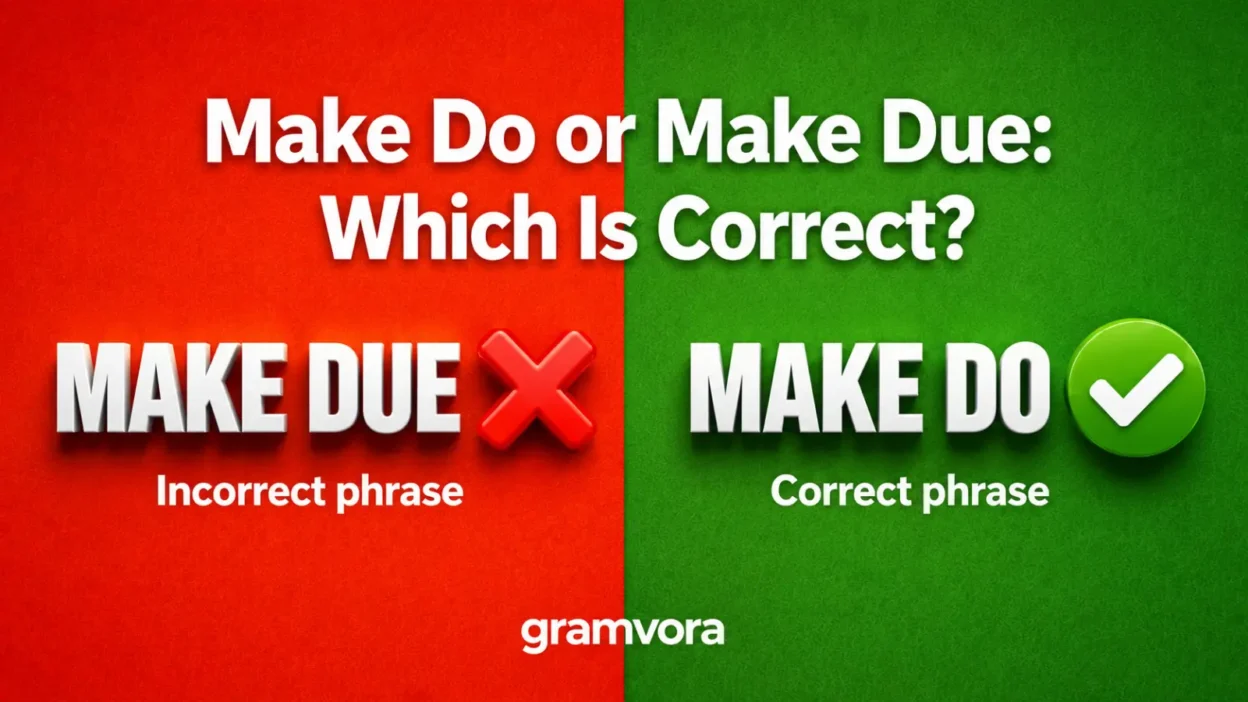
The correct phrase is make do, not make due, when you mean to manage with what you have.
Use make do when supplies, money, time, space, or options are limited. It means you are getting by, even if the situation is not ideal.
Make due is a common mistake in this meaning. It usually happens because do and due sound the same in everyday US speech. But the words do not do the same job in this phrase.
Quick Answer
Use make do.
Correct: We forgot the folding chairs, so we’ll make do with the picnic blanket.
Incorrect: We forgot the folding chairs, so we’ll make due with the picnic blanket.
The phrase is not about something being owed, scheduled, or expected. That is where due belongs: a bill is due, a baby is due, or a report is due Friday.
When the meaning is “manage with what is available,” the right choice is make do.
Why People Confuse Them
The confusion is easy to understand. In much of American speech, do and due are both pronounced like “doo.”
That sound match makes make due look possible when people write the phrase after hearing it. The word due also feels formal and familiar because it appears in phrases like due date, due to, and in due time.
Still, those meanings do not fit here. In make do, the word do carries the idea of something serving well enough. You are making the available option “do” the job.
Key Differences At A Glance
| Context | Best Choice | Why |
|---|---|---|
| Managing with limited supplies | make do | This is the standard idiom. |
| Using a substitute | make do | It means the substitute will work well enough. |
| Talking about a deadline | due | Use due by itself, not make due. |
| Talking about money owed | due | Due means owed or payable. |
| Writing for school or work | make do | Make due looks like an error in this meaning. |
| Naming a makeshift item | make-do | The hyphenated form can work as a noun or adjective. |
Meaning and Usage Difference
Make do means to manage with what is available, especially when it is less than what you wanted.
You might make do with leftovers, an older laptop, a smaller budget, or a temporary plan. The phrase often suggests flexibility and patience.
Make due is not the standard phrase for this meaning. It mixes the idiom make do with the separate word due.
Compact comparison:
- make do: correct idiom meaning “manage with what you have”
- make due: mistaken form when used to mean “manage”
- due: separate word meaning owed, expected, scheduled, proper, or caused by something
So the real choice is not between two equal expressions. It is between a correct idiom and a common misspelling of that idiom.
Tone, Context, and Formality
Make do sounds natural in everyday US English. It works in casual writing, workplace messages, essays, and clear professional writing.
Examples:
We can make do with one car this weekend.
The team had to make do without the usual meeting room.
Until the new parts arrive, we’ll make do with the backup unit.
In very formal writing, you may choose a plainer phrase like manage with available resources. But make do is still acceptable when the tone allows a normal, human phrase.
Make due does not sound more formal. In this meaning, it sounds wrong because due points readers toward deadlines, payments, or obligations.
Which One Should You Use?
Use make do when you mean:
You can get by.
The option is not perfect, but it will work.
You are using what is available.
You are coping with a shortage or limit.
Use due only when the sentence is about something owed, scheduled, expected, proper, or caused by something.
Correct: The payment is due tomorrow.
Correct: The delay was due to traffic.
Correct: We’ll make do with the smaller room.
Do not combine make and due when your meaning is “manage.”
When One Choice Sounds Wrong
Make due sounds wrong when it is followed by with.
Incorrect: We’ll make due with sandwiches for dinner.
Correct: We’ll make do with sandwiches for dinner.
It also sounds wrong when the sentence is about coping.
Incorrect: The office ran out of toner, so we made due.
Correct: The office ran out of toner, so we made do.
The only time make and due might appear near each other is in a different sentence structure, not as the idiom.
Example: Please make the payment due on Friday.
That sentence is awkward, but it uses due to describe a payment date. It is not the phrase make due.
Common Mistakes (and Quick Fixes)
A common mistake is writing make due with because the phrase was heard, not read.
Wrong: I’ll make due with my old phone for now.
Right: I’ll make do with my old phone for now.
Another mistake is thinking due sounds more polished.
Wrong: We had to make due under the circumstances.
Right: We had to make do under the circumstances.
Some writers also confuse make do with make-do.
Use make do as the verb phrase.
Example: We can make do for one night.
Use make-do as a noun or adjective when it means a substitute or makeshift thing.
Example: The blanket became a make-do curtain.
Everyday Examples
I wanted a larger apartment, but I can make do with this place for another year.
The hotel was out of king rooms, so we made do with two doubles.
She forgot her lunch and had to make do with crackers from her desk.
Our internet went down, so we made do with a phone hotspot.
The class did not have enough markers, but the students made do.
We can make do without a second printer until next month.
He had hoped for a full team, but he made do with three volunteers.
They made do with a small backyard wedding and still had a great day.
I do not have fresh basil, so I’ll make do with dried herbs.
The charger is slow, but it will do for now.
Dictionary-Style Word Details
Verb
make do: A verb phrase and idiom. It means to manage, cope, or get by with what is available.
Example: We’ll make do with what we packed.
make due: Not commonly used as a verb phrase in standard US English for this meaning. When people write it, they usually mean make do.
Noun
make do: Not commonly used as a noun in the two-word form.
make-do: The hyphenated form can be a noun meaning a substitute or makeshift item.
Example: The cardboard sign was a make-do until the real one arrived.
make due: Not commonly used as a noun in standard US English.
Synonyms
make do: Closest plain alternatives include manage, get by, cope, improvise, and make the best of it. These are not always exact swaps, but they fit many sentences.
make due: No meaning-matched synonyms apply when it is used by mistake for make do.
For due by itself, close alternatives depend on meaning: owed, payable, expected, or scheduled. Those do not replace make do.
Clear antonyms are not simple for the full idiom. The opposite idea is usually have enough, use the proper item, or get exactly what is needed.
Example Sentences
make do: We did not have a conference room, so we made do with a quiet corner of the lobby.
make do: If the store is out of fresh pasta, I can make do with boxed pasta.
make do: The budget is tight, but we can make do until July.
make due: Not standard for the meaning “manage with what is available.”
Corrected example: We can make do with the old chairs until the new ones arrive.
Word History
make do: The phrase is tied to the older sense of making something “do,” meaning making it serve the purpose well enough. That idea still explains the phrase clearly today.
make due: The history is less useful for everyday writers because this form is not the modern standard idiom. In current US writing, it is safest to treat make due as a mistaken version of make do when the meaning is “manage.”
No first-use date is needed to choose correctly.
Phrases Containing
make do: Common forms include make do with, make do without, and make do for now.
Examples:
We’ll make do with the smaller table.
They had to make do without air conditioning.
This setup is not perfect, but it will make do for now.
make due: No standard phrase containing make due is needed for this meaning. Use due in its own correct phrases, such as due date, due to, and in due time, but do not use those as replacements for make do.
Conclusion
Make do is the correct choice when you mean to manage with what you have.
Make due is a common error in that same meaning. It happens because do and due often sound alike, but only do belongs in this idiom.