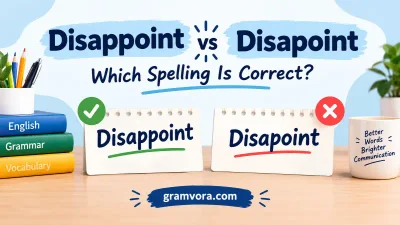

English spelling can be confusing when a word contains a letter pattern that does not match what a writer expects. Foreign is one such word. Many people recognize it when they read it, yet they sometimes type foriegn by mistake.
The difference is small: the letters e and i appear in the wrong order in the misspelled form. However, this simple switch creates an error that can affect school assignments, business emails, website articles, and other written content.
The correct spelling is foreign. The form foriegn is not an accepted alternative in standard American English. It is also not a British English spelling variation.
Learning the correct letter order makes this mistake easier to avoid. It also helps when writing common expressions such as foreign language, foreign country, foreign policy, and foreign currency.
This guide compares the two forms, explains why writers confuse them, and provides practical examples and memory tips. The goal is straightforward: help you recognize the correct spelling and use it confidently in everyday writing.
Quick Answer
Foreign is the correct spelling. Foriegn is incorrect because the letters e and i are reversed.
The correct word is spelled:
F-O-R-E-I-G-N
The incorrect form is spelled:
F-O-R-I-E-G-N
The word foreign is primarily an adjective. It commonly describes something connected with another country or something unfamiliar to a person, group, or setting.
For example:
- Correct: She wants to learn a foreign language.
- Incorrect: She wants to learn a foriegn language.
The meaning is usually clear when someone writes foriegn, but the spelling still needs correction. Use foreign in schoolwork, professional documents, personal messages, and published writing.
Why People Confuse Them
The main reason people confuse foreign and foriegn is the order of the vowels. The letters e and i appear next to each other, and writers may remember the sounds and general appearance of the word without remembering their exact positions.
English spelling does not always follow one simple pattern. Although many learners are taught “i before e except after c,” that saying has several exceptions and cannot reliably determine every word’s spelling. It is better to learn the established spelling of foreign directly.
Pronunciation can also contribute to the confusion. In American English, foreign is commonly pronounced approximately FOR-in. The middle letters are not pronounced as two distinct vowel sounds, so listening alone may not reveal their order.
Another reason is typing speed. When people write quickly, they may reverse nearby letters without noticing. The error can remain in a document if the writer focuses only on the meaning of the sentence.
Repeated exposure to correct examples helps. Reading phrases such as foreign travel, foreign language, and foreign investment makes the standard spelling more familiar.
The most useful strategy is to remember the letter sequence E-I in the middle of foreign. When proofreading, check those two letters specifically rather than rereading the whole word without paying attention to its spelling.
Key Differences At A Glance
The difference between these forms is spelling accuracy, not meaning or regional preference.
| Context | Best Choice | Why |
|---|---|---|
| American English | foreign | Standard spelling |
| British English | foreign | The same spelling is used |
| School assignments | foreign | The alternative is a misspelling |
| Professional emails | foreign | Standard spelling is expected |
| Website articles | foreign | Use the established form in titles and text |
| Foreign language | foreign | Standard expression |
| Foreign policy | foreign | Standard expression |
| Foreign currency | foreign | Standard expression |
A quick comparison makes the letter order clear:
- Foreign: F-O-R-E-I-G-N — correct.
- Foriegn: F-O-R-I-E-G-N — incorrect.
The letters e and i are the only difference between these two forms. There is no separate standard meaning attached to foriegn.
Are They the Same Word?
Foreign and foriegn are intended to represent the same word, but they do not have the same status in standard English. Foreign is the recognized spelling, while foriegn is a spelling error.
The adjective foreign can describe something that comes from another country. For example, a foreign company may be based outside the country where it operates, and a foreign language may be one that is not native to a particular speaker.
The word can also describe something unfamiliar or outside a person’s experience. If a new computer system is completely unfamiliar to someone, that person might say the system is foreign to them.
Here are examples of correct usage:
- “My cousin is studying a foreign language.”
- “The company plans to enter a foreign market.”
- “She exchanged dollars for foreign currency before traveling.”
- “The concept was foreign to me when I first heard it.”
In each example, the word has the same standard spelling.
Writing foriegn does not create a new word with a different definition. It simply makes the sentence incorrect in standard edited English. A reader may understand the intended meaning, but understanding does not make the spelling acceptable.
US vs UK Preference
American and British English both use foreign. There is no standard regional spelling difference that makes foriegn acceptable in the United Kingdom.
Some English words have recognized regional variations. For example, certain words differ in their use of -or and -our, or -ize and -ise. Those patterns do not apply to this comparison.
If you are writing for an American audience, use foreign. The same advice applies when writing for a British audience or an international readership.
Consistency matters in published work, but a consistent misspelling is still an error. If a document repeatedly uses foriegn, correct every occurrence rather than keeping it to match earlier mistakes.
Pay attention to the word in all parts of a publication, including:
- Article titles and headings
- Paragraphs and examples
- Image text and captions
- Page descriptions
- School presentations
- Business documents
The correct form remains foreign in each setting.
Which Spelling Should You Use?
Choose foreign whenever you need the standard English word. Do not use foriegn as an alternative spelling.
For example, write:
- “He is interested in foreign cultures.”
- “Our school offers several foreign language classes.”
- “The company imports products from foreign markets.”
- “She read an article about foreign policy.”
- “I need to exchange money for foreign currency.”
Avoid these incorrect versions:
- “He is interested in foriegn cultures.”
- “Our school offers several foriegn language classes.”
- “The company imports products from foriegn markets.”
A practical way to learn the word is to memorize it as a complete sequence: FOR-EIGN. Focus on the E-I order after the letters for.
You can also learn the word as part of familiar phrases. When you remember foreign language, foreign country, and foreign policy, you reinforce the correct spelling in several useful contexts.
If you are unsure while writing, pause and check the middle of the word. This small habit can prevent repeated mistakes.
When One Spelling Looks Wrong
At first glance, foriegn may look believable because it contains all the letters found in foreign. The only change is the order of two vowels. That makes the error easy to overlook, particularly when reading quickly.
However, a word’s appearance is not enough to establish whether its spelling is correct. The standard form is determined by accepted English usage, not by whether a misspelling looks familiar.
The easiest visual check is to compare the two sequences:
Foreign: F-O-R-E-I-G-N
Foriegn: F-O-R-I-E-G-N
The correct sequence places E before I. In this word, memorizing that order is more reliable than applying a general spelling saying.
The error may be especially noticeable in a prominent heading or title. A reader who sees foriegn language on an educational website may question the care taken with the rest of the content.
That does not mean one spelling error makes an entire document unreliable. It does mean proofreading is valuable. Correct the word wherever it appears, then check the surrounding text for other typing mistakes.
Common Mistakes (and Quick Fixes)
Writers can avoid this error by learning the letter sequence and checking familiar expressions.
1. Reversing the vowels
Incorrect: “I want to study a foriegn language.”
Correct: “I want to study a foreign language.”
Quick fix: Remember E-I in the middle of foreign.
2. Assuming pronunciation reveals spelling
A person may hear the word pronounced approximately “FOR-in” and be unsure which vowel comes first.
Quick fix: Learn the written form separately from its pronunciation. The spoken sound does not clearly identify the order of the two letters.
3. Applying a spelling saying too broadly
Some writers rely on “i before e except after c” as if it worked for every English word.
Quick fix: Treat spelling sayings as general memory aids, not universal rules. Memorize foreign as an individual word.
4. Repeating the same error throughout a document
A misspelling can appear in an article title, an introduction, and several examples.
Quick fix: Search for foriegn and review each occurrence. Replace it with foreign when the intended word is the standard adjective.
5. Misspelling common expressions
Expressions such as foreign policy and foreign currency may be typed incorrectly when a writer is working quickly.
Quick fix: Learn the full phrases with the correct spelling. Familiar word combinations are easier to recognize during proofreading.
6. Assuming the error is regional
A writer may believe foriegn is accepted in another English variety.
Quick fix: Use foreign in both American and British English.
7. Correcting only the main paragraph
The word may be fixed in the article body but remain misspelled in a caption or image.
Quick fix: Review the full page, including headings, image text, captions, and descriptions.
Everyday Examples
These examples demonstrate how foreign appears in common American English writing.
Education
- “Maya is learning a foreign language in college.”
- “The teacher recommended books about foreign cultures.”
- “Students compared education systems in several foreign countries.”
Travel
- “Remember to check the exchange rate before buying foreign currency.”
- “We researched local customs before visiting a foreign country.”
- “The travel company offers trips to several foreign destinations.”
Business
- “The company hopes to attract foreign investment.”
- “Our team is studying opportunities in foreign markets.”
- “The manager discussed the cost of importing foreign products.”
News and government
- “The candidates discussed foreign policy during the debate.”
- “The report examined trade with foreign countries.”
- “The agency released information about foreign affairs.”
Everyday conversation
- “That expression is foreign to me.”
- “The new software felt foreign when I first used it.”
- “She enjoys trying food from foreign cultures.”
Each sentence uses foreign in the standard form. If you see foriegn in a similar sentence, correct the letter order.
Dictionary-Style Word Details
Verb
- Foreign: Primarily an adjective in standard everyday English, not a verb. It describes something connected with another country or something unfamiliar.
- Foriegn: Not a standard spelling of a verb or adjective. Use foreign when the intended word is the standard adjective.
Neither form is a standard verb in ordinary American English.
Noun
- Foreign: Most commonly used as an adjective. It is not ordinarily used as a standalone noun in everyday American writing. Related nouns include foreigner, which refers to a person from another country, and foreignness, which refers to the quality of being foreign.
- Foriegn: Not a standard noun spelling.
For example, write “The foreign visitor arrived this morning,” not “The foriegn visitor arrived this morning.”
Synonyms
- Foreign: Depending on context, possible alternatives include overseas, international, external, or unfamiliar. These words are not exact substitutes in every sentence. International often refers to relations between countries, while unfamiliar focuses on a lack of knowledge or experience.
- Foriegn: It has no separate standard meaning or independent set of synonyms because it is a misspelling.
Choose a replacement according to the sentence. For example, international trade may work in place of foreign trade in some contexts, but unfamiliar would not fit every reference to another country.
There is no single antonym for foreign in every context. Depending on the intended meaning, words such as domestic, local, or familiar may provide a contrast.
Example Sentences
- Foreign: “She speaks two foreign languages.”
- Foriegn: Incorrect spelling; write “She speaks two foreign languages.”
- Foreign: “The store sells foreign products.”
- Foreign: “The idea was completely foreign to him.”
- Foreign: “The government announced a change in foreign policy.”
These examples show two common uses: describing a connection with another country and describing something unfamiliar. The spelling remains the same in both cases.
Word History
The spelling of foreign reflects its historical development through French into English. Its present form is established in modern English, and the spelling foriegn is not an accepted historical or regional alternative in standard contemporary usage.
The history is not needed to understand the practical spelling choice. For modern writing, the important point is to preserve the letters in their standard order: F-O-R-E-I-G-N.
Phrases Containing
- Foreign language: “He is taking a foreign language course.”
- Foreign country: “They visited a foreign country during their vacation.”
- Foreign policy: “The report discussed the nation’s foreign policy.”
- Foreign currency: “She exchanged money for foreign currency.”
- Foreign market: “The company is exploring a foreign market.”
- Foreign investment: “The region hopes to attract foreign investment.”
- Foreign affairs: “The committee reviewed issues related to foreign affairs.”
- Foreign to someone: “The subject was foreign to me before the class.”
Use foreign in each expression. Replacing it with foriegn creates a spelling error without changing the intended meaning.
FAQs
Is it foreign or foriegn?
Foreign is the correct spelling. Foriegn is a common misspelling and is not accepted as a standard spelling in English.
How do you spell foreign correctly?
The correct spelling is F-O-R-E-I-G-N. Remember the letter order in the middle: E-I, not I-E.
What does foreign mean?
Foreign usually describes something that comes from, belongs to, or relates to another country. It can also describe something unfamiliar or outside a person’s experience.
Examples:
- She enjoys learning foreign languages.
- The company sells foreign products.
- The idea was foreign to him.
Why do people spell foreign as foriegn?
People often reverse the letters E and I because the word’s pronunciation does not clearly reveal its spelling. Remembering the correct letter order can help prevent this mistake.
Is foreign the correct spelling in American English?
Yes. Foreign is the standard spelling in American English. Use it in school assignments, professional emails, business documents, and website articles.
Do British English speakers spell it foreign or foriegn?
British English also uses foreign. The spelling does not change between American and British English.
How do you pronounce foreign?
In American English, foreign is commonly pronounced approximately “FOR-in.” The pronunciation may make the written form difficult to remember because the spelling contains letters that are not all clearly heard.
What is an easy way to remember the spelling of foreign?
Focus on the middle letters: EI.
Correct: FOR-EI-GN — foreign
Incorrect: FOR-IE-GN — foriegn
You can also write the word several times and use it in a sentence to reinforce the correct spelling.
Is foreign an adjective or a noun?
Foreign is most commonly used as an adjective. It describes a noun, as in foreign country, foreign language, and foreign currency.
It can also appear in established noun uses, but the adjective is the most common form in everyday writing.
What are some common phrases that use foreign?
Common phrases include:
- Foreign country
- Foreign language
- Foreign policy
- Foreign currency
- Foreign investment
- Foreign affairs
- Foreign trade
- Foreign visitor
In every phrase, foreign is the correct spelling.
Conclusion
When choosing between foreign and foriegn, always use foreign. The second form is a common misspelling caused by reversing the letters e and i. It is not an accepted alternative in standard American or British English.
The easiest way to remember the correct form is to focus on the middle letters: E comes before I in foreign. Learn the word together with familiar phrases such as foreign language, foreign country, and foreign policy to reinforce the pattern.
Before publishing an article, sending an email, or submitting an assignment, check the spelling carefully. If you find foriegn, replace it with foreign and review other occurrences throughout the document.
A small correction can make your writing more polished and easier to trust. Remember the sequence F-O-R-E-I-G-N, and you will be better prepared to avoid this common spelling mistake.