
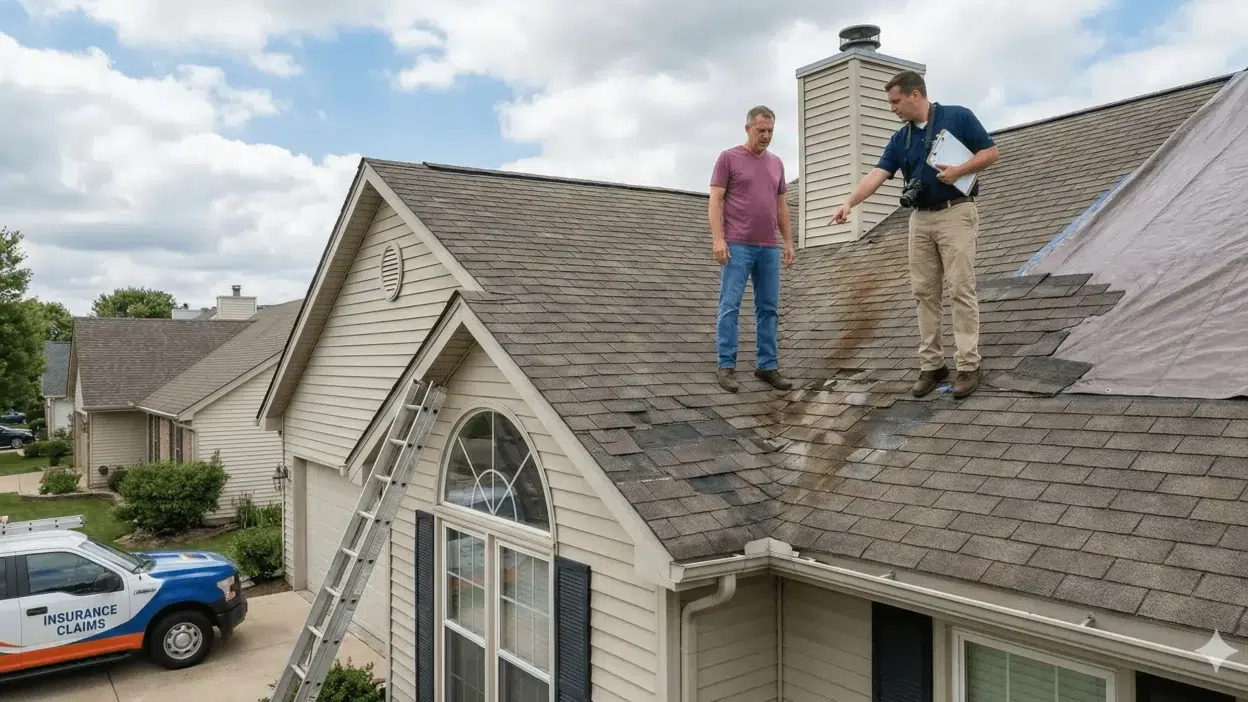
Florida homeowners insurance policies cover roof replacement when a qualifying weather event causes sudden, direct physical damage to the roof system. What they do not cover is wear, age-related deterioration, or damage that a licensed Fort Myers roofer could have caught and repaired before a storm arrived. That distinction decides most denied claims in the state.
Understanding where coverage begins and ends lets you file correctly, document thoroughly, and avoid the most common reasons insurers reduce or reject a roof replacement claim.
What a Standard Florida Homeowners Policy Actually Covers
A standard HO-3 policy in Florida covers roof damage caused by named perils: wind, hail, falling objects, fire, and certain water events caused by sudden structural failure. When a hurricane or tropical storm tears shingles from a roof, cracks tile fields, lifts flashing, or forces water through the deck, that damage falls within the covered-perils framework.
Two conditions shape how much the insurer pays:
Actual Cash Value (ACV) versus Replacement Cost Value (RCV). An ACV policy depreciates the roof based on its age and condition at the time of the storm. A 20-year-old tile roof with a 25-year lifespan might receive only a fraction of the replacement cost because the policy treats the remaining useful life as the covered value. An RCV policy pays the full cost to replace the roof with materials of like kind and quality, minus the deductible.
The roof’s condition before the storm. Florida insurers inspect roofs before issuing or renewing policies, and they photograph the condition at policy inception. If the roof showed pre-existing damage, missing mortar, cracked field tile, or lifted shingles before the storm, the insurer will separate that pre-existing damage from the storm-caused damage. Only the storm-caused portion is covered.
What Florida Homeowners Insurance Does Not Cover
Policies explicitly exclude:
- Gradual deterioration from age, UV exposure, and repeated thermal cycling
- Damage from mold, algae, or rot that developed over time rather than from a sudden event
- Repairs the homeowner deferred after a prior storm or inspection finding
- Damage caused by a lack of maintenance that a reasonable homeowner should have addressed
Florida’s insurance market has tightened considerably over the past several years. Several carriers now write policies with roof age exclusions: if the roof material is past a set threshold (often 15 years for shingle, 20 for tile), the policy will not cover full replacement regardless of storm cause. Homeowners in this situation may only qualify for an ACV settlement or for a roof-condition rider at an additional premium. Read your policy’s roof coverage section before the next storm season, not after it.
How the Claims Process Works on a Roof Replacement
Filing a roof replacement claim through homeowners insurance follows a defined sequence. Knowing the steps protects both the settlement and the timeline.
- Document the damage before any temporary repair. Photograph every damaged area from multiple angles before a tarp goes on the roof. Include close-up shots of lifted or missing shingles, cracked or displaced tile, exposed deck boards, and any interior water intrusion. Date-stamped photos taken within 24 to 48 hours of the storm carry the most weight with adjusters.
- Apply a temporary tarp to stop active water intrusion. Emergency tarping is a reasonable protective measure and does not compromise the claim. Keep all receipts for emergency repair costs; most policies reimburse reasonable emergency mitigation expenses.
- Request an adjuster inspection. Contact your insurer and request an inspection. The adjuster visits the property, photographs the damage, and produces a scope of loss document that describes what the insurer will pay to repair or replace.
- Get an independent inspection from a licensed roofing contractor. An adjuster works for the insurance company. A licensed roofer works for you. An independent inspection produces a written scope that you can compare against the adjuster’s scope. If the two scopes differ significantly, a public adjuster or the Florida Department of Financial Services dispute process gives you a formal path to contest the settlement.
- Pull the required permit before any replacement work begins. Florida law requires a permit for roof replacement work. A licensed roofer pulls the permit, which triggers an inspection by the local building department. Permitted work is documented in public records, which protects the homeowner if the property is later sold or if a subsequent storm generates another claim.
The Specific Risk of Unlicensed Contractors After a Storm
After a major storm passes through a Florida county, unlicensed contractors move into the area quickly. They offer fast starts, low prices, and verbal warranties that carry no legal weight. The risk to the homeowner is direct: work performed by an unlicensed contractor voids most Florida homeowners insurance policies for damage that results from that work. It also removes the homeowner’s ability to pursue the contractor through the state’s licensing board if the repair fails.
A Florida-licensed roofing contractor holds a state-issued Certified Roofing Contractor (CRC) or Registered Roofing Contractor (RRC) license. You can verify any contractor’s license status through the Florida Department of Business and Professional Regulation (DBPR) website before signing any agreement. A licensed contractor also carries liability insurance and workers’ compensation coverage, which protects the homeowner if a crew member is injured during the repair.
A Note on Roof Age and Florida’s Changing Insurance Landscape
Florida’s property insurance market has seen carriers tighten underwriting standards on older roofs. Homeowners with roofs approaching or past 15 years should have a licensed roofer conduct a documented inspection before the next renewal cycle. That inspection report serves two purposes: it establishes the roof’s current condition in writing, and it gives the insurer accurate information that can prevent a mid-term policy cancellation.
A roof that shows minor wear but is structurally sound may qualify for a repair rather than a full replacement, which keeps the homeowner off the insurer’s cancellation list and keeps the premium intact.
Saint Raphael / Apple Roofing is a licensed roofing contractor serving Fort Myers, F,L and the Southwest Florida area. The crew inspects, repairs, and replaces residential and commercial roofing systems across Lee, Charlotte, and Sarasota counties and assists homeowners through the insurance claim process from initial inspection through permitted repair.
View Your Trusted Roofing Partner in Fort Myers in a full screen map
Media Contact:
Company Name: Saint Raphael / Apple Roofing
Spokesperson:
Phone: (239) 220-5120
Address: 7911 Drew Cir
City: Fort Myers
State: FL
Postal Code: 33967
Country: United States
Website: https://appleroof.com/fort-myers-fl/
Social Media:
https://www.facebook.com/appleroofing
https://www.linkedin.com/company/apple-roofing-llc/