Many English speakers wonder whether they should write theater or theatre. Since both spellings appear in books, websites, signs, and entertainment venues, the difference is not always obvious.
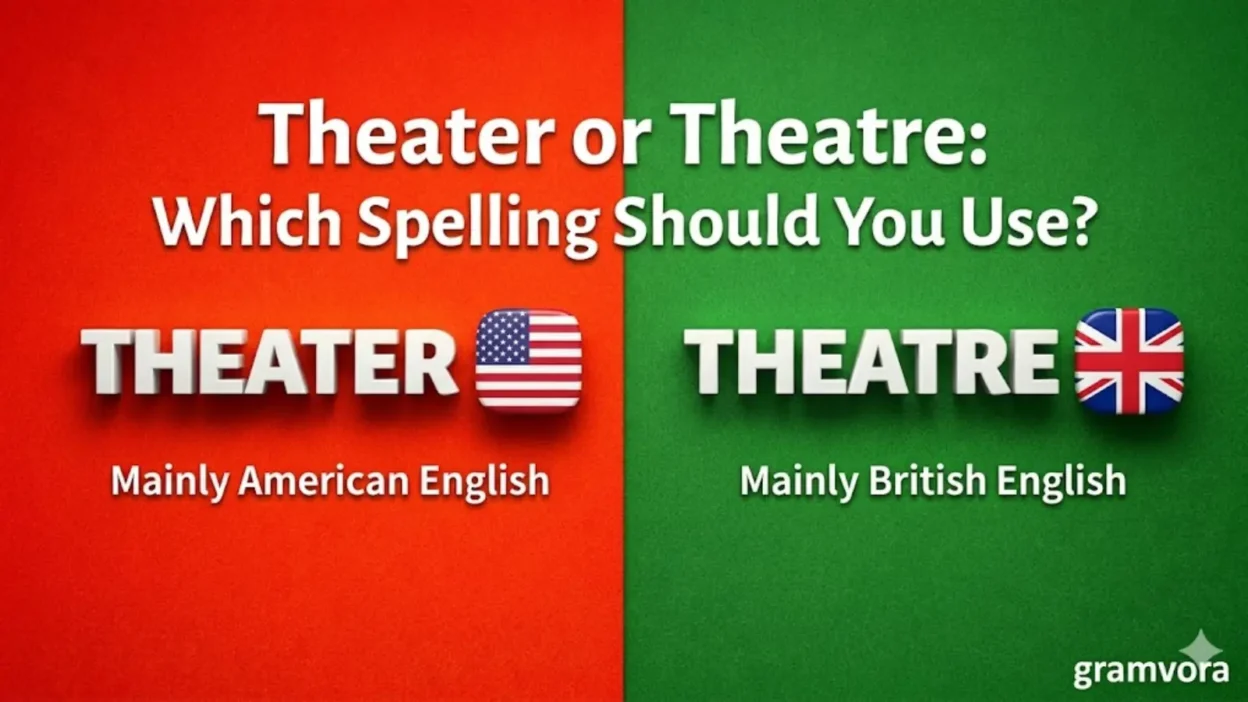
The short answer is that both spellings are legitimate English words. However, their preferred usage depends largely on region, audience, style, and context. In the United States, theater is generally the preferred spelling, while theatre is often associated with British English or used as a stylistic choice by certain organizations and performance venues.
Understanding when and why each form appears can help you choose the spelling that best matches your audience and writing purpose.
Quick Answer
Both theater and theatre are correct.
For most American English writing:
Theater is the preferred spelling.
For many British English publications:
Theatre is more common.
In the United States, some performing arts organizations intentionally use theatre as part of their official names, even though theater remains the standard American spelling.
If you are writing for a US audience and have no special style requirements, theater is usually the safest choice.
Why People Confuse Them
The confusion exists because the two spellings refer to the same thing.
Whether someone writes:
- movie theater
- movie theatre
or
- community theater
- community theatre
the intended meaning is usually identical.
Unlike many commonly confused words, the distinction is not primarily about meaning. Instead, it is mostly about spelling preference, regional convention, and style.
Readers often assume one spelling must be wrong because many English word comparisons involve a clear grammatical difference. In this case, however, both forms are accepted.
The challenge is deciding which spelling best fits a particular audience.
Key Differences At A Glance
| Context | Best Choice | Why |
|---|---|---|
| General American English | Theater | Standard US spelling |
| Most US newspapers and websites | Theater | Preferred style |
| General British English | Theatre | Traditional preference |
| Performing arts organizations | Either | Depends on official name |
| Movie venues in the US | Theater | Most common usage |
| Academic discussion of dramatic arts | Either | Style guide may determine choice |
| Official business names | Use official spelling | Names should not be changed |
Meaning and Usage Difference
The most important thing to know is that theater and theatre share the same core meaning.
Both can refer to:
- a building where performances occur
- a place where movies are shown
- the dramatic arts as a field
- stage productions and performance culture
Theater
In modern American English, theater is the dominant spelling.
Examples:
- We went to the theater last night.
- The theater was sold out.
- She studied theater in college.
- The new theater opens next month.
Many American dictionaries list theater as the primary US form.
Theatre
Theatre is also a correct spelling.
It is especially common in:
- British English
- Certain artistic organizations
- Official venue names
- Some academic and cultural settings
Examples:
- The theatre hosted a Shakespeare festival.
- She works in the theatre industry.
- The local theatre announced a new season.
Are the Meanings Different?
Usually no.
In everyday writing, the meanings are effectively the same.
Some people claim that theatre should refer only to live stage performances while theater should refer to movie houses. However, this distinction is not consistently followed in real-world English.
You can find respected organizations, publications, and institutions using both spellings for live performances and dramatic arts.
Because usage varies, it is better to focus on audience expectations rather than trying to force a strict meaning difference.
Tone, Context, and Formality
Neither spelling is inherently more formal.
However, each spelling may create a different impression.
Theater
In American English, theater often feels:
- modern
- standard
- straightforward
- widely familiar
It is the spelling many US readers expect to see.
Theatre
In some contexts, theatre may appear:
- traditional
- artistic
- classical
- culturally focused
This does not make it more correct. It simply reflects common associations some readers have developed through exposure to performing arts organizations.
Because of these associations, some arts groups intentionally choose theatre as part of their branding.
Which One Should You Use?
The answer depends on your audience.
Use Theater When:
- writing for a US audience
- following standard American English
- creating general web content
- writing business communications
- preparing school assignments in American English
- discussing movie venues in the US
Examples:
- The theater opens at 7 p.m.
- Our local theater offers acting classes.
- She majored in theater.
Use Theatre When:
- following British English conventions
- matching an organization’s official spelling
- quoting a title or proper name
- following a style guide that prefers it
Examples:
- The theatre company announced auditions.
- He works in the theatre district.
- The Royal Theatre reopened after renovations.
When in Doubt
For a general American audience, choose theater.
It is the most widely accepted and expected spelling in the United States.
When One Choice Sounds Wrong
Problems usually occur when writers mix spellings inconsistently.
For example:
- The theater hosted a show.
- Our local theatre also offered classes.
Both words are correct individually, but switching back and forth within the same article can look careless unless there is a reason for the change.
Consistency matters.
Another common issue occurs when writers change the official spelling of a venue.
Incorrect:
- Grand Theatre becomes Grand Theater.
Correct:
- Keep the official name exactly as it appears.
Business names, organization names, and venue names should retain their original spelling.
Common Mistakes (and Quick Fixes)
Mistake: Assuming One Spelling Is Wrong
Fix:
Remember that both spellings are accepted English forms.
Mistake: Mixing Spellings Randomly
Fix:
Choose one style and use it consistently.
Mistake: Changing Official Names
Fix:
Always preserve the official spelling used by the organization.
Mistake: Treating the Difference as a Strict Meaning Rule
Fix:
The meanings generally overlap. Regional preference is usually more important.
Mistake: Following British Style in US Content Without Intention
Fix:
For American audiences, theater is usually the preferred option.
Everyday Examples
Here are examples showing how each spelling naturally appears in real-world writing.
Theater Examples
- We bought tickets for the theater downtown.
- The theater installed new seats.
- She teaches theater at a local college.
- The theater program attracts hundreds of students.
- We stopped by the theater after dinner.
- The theater district was busy all weekend.
- He hopes to work in theater professionally.
- The theater hosted a charity event.
- The movie theater was packed.
- The theater announced a holiday performance.
Theatre Examples
- The theatre company released its season schedule.
- She has worked in theatre for many years.
- The historic theatre reopened after restoration.
- The theatre festival attracted international performers.
- He studied theatre history.
- The local theatre group staged a comedy.
- The theatre audience gave a standing ovation.
- She volunteers at the community theatre.
- The theatre production received excellent reviews.
- The theatre organization expanded its outreach programs.
Dictionary-Style Word Details
Verb
Theater:
Not commonly used as a verb in standard American English.
Theatre:
Not commonly used as a verb in standard American English.
Noun
Theater:
A noun referring to a building for performances or movies, the dramatic arts, or a place of public entertainment.
Examples:
- The theater was renovated.
- She studies theater.
Theatre:
A noun with the same core meaning, commonly used in British English and certain official names.
Examples:
- The theatre was crowded.
- He works in theatre.
Synonyms
Theater
Closest plain alternatives:
- playhouse
- auditorium
- performance venue
- arts center
- movie house
Theatre
Closest plain alternatives:
- playhouse
- auditorium
- performance venue
- arts center
- dramatic arts
Because the meanings largely overlap, the same alternatives often apply to both spellings.
Example Sentences
Theater
- We visited the theater after dinner.
- The theater sold every ticket.
- She studied theater in college.
- The theater hosted a musical.
Theatre
- The theatre presented a classic drama.
- He enjoys working in theatre.
- The theatre reopened this year.
- The theatre company expanded its season.
Word History
Theater
The spelling developed as an American English preference over time. It became widely established in US writing and publishing and remains the dominant American form today.
Theatre
The spelling reflects an older French-influenced form that remained common in British English. It continues to be widely used throughout many English-speaking regions outside the United States and also appears in the names of numerous arts organizations.
Phrases Containing
Theater
- movie theater
- theater district
- theater program
- community theater
- theater company
- theater arts
- theater ticket
- theater season
Theatre
- community theatre
- theatre company
- theatre district
- theatre arts
- theatre production
- theatre season
- theatre festival
- theatre performance
FAQs
1. Is “theater” or “theatre” correct in American English?
Theater is the standard spelling in American English. However, theatre is still correct when it is part of an official name or used in artistic branding.
2. What is the main difference between theater and theatre?
There is no difference in meaning. The difference is mainly spelling preference:
- Theater → common in the United States
- Theatre → common in British English and some arts organizations
3. Can I use “theatre” in the US?
Yes. You can use theatre in the US if:
- it is the official name of a venue or company
- you are following British English style
Otherwise, theater is preferred in general writing.
4. Does “theater” only mean movies?
No. Theater can mean:
- live stage performances
- the art of acting
- movie cinemas (in American English)
Context decides the meaning.
5. Why do some places use “theatre” in their name?
Many performing arts groups use theatre for tradition, branding, or artistic identity. It does not change the meaning—just the style.
6. Is one spelling more formal than the other?
No. Neither is more formal. The difference is mainly regional and stylistic, not grammatical.
7. Which spelling should I use for school writing?
If you are writing in American English, use theater unless your teacher or style guide specifically prefers theatre or an official name requires it.
Conclusion
When comparing theater or theatre, the most important thing to remember is that both spellings are correct.
The primary difference is not meaning but preference and convention. American English generally favors theater, while British English more commonly uses theatre.
For most US-based writing, theater is the standard choice. However, theatre remains entirely valid when following British conventions or using the official name of an organization.
If your audience is American and no style guide says otherwise, choose theater and use it consistently throughout your writing.