Programs or programmes can confuse writers because both words are real English forms. They usually point to the same basic idea: planned activities, organized services, shows, courses, or sets of instructions.
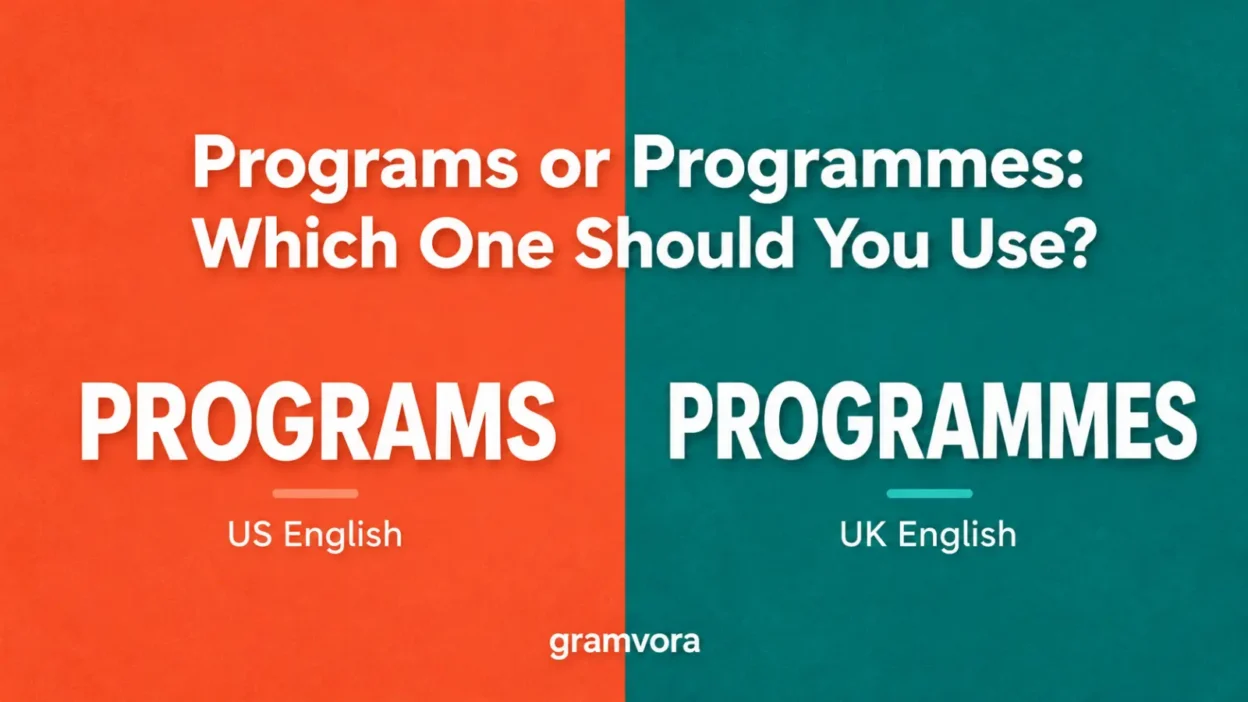
For a US audience, programs is the normal spelling. You would write school programs, training programs, government programs, TV programs, and computer programs.
Programmes is mainly a British English spelling. It appears in phrases like TV programmes, theatre programmes, and government programmes. In standard US writing, it usually looks foreign or overly British unless you are quoting a title, brand, or British source.
Quick Answer
Use programs in American English.
Use programmes mainly in British English when you mean planned activities, TV shows, event guides, public plans, or organized courses.
For computer software, programs is the safest spelling almost everywhere.
Examples:
Correct in US English:
The school offers summer programs for teens.
Correct in British English:
The school offers summer programmes for teens.
Correct for computers:
The laptop has too many unused programs.
Why People Confuse Them
People confuse programs and programmes because the words look almost the same and often mean the same thing. The difference is not usually meaning. It is mostly spelling tradition and audience expectation.
American English simplified the spelling to program and uses programs as the plural. British English kept programme for many non-computer uses, so the plural became programmes.
That means a US reader expects programs. A UK reader may expect programmes in many everyday non-computer contexts.
Key Differences At A Glance
| Context | Best Choice | Why |
|---|---|---|
| US writing | programs | Standard American spelling |
| British writing about TV, events, plans, or courses | programmes | Common British spelling |
| Computer software | programs | Standard in US English and widely used in computing |
| International business writing | programs | Usually clearer for a broad audience |
| Quoting a British title or organization | programmes | Keep the original spelling |
| School or community services in the US | programs | Natural US usage |
| Theatre event guide in the UK | programmes | Natural British usage |
Meaning and Usage Difference
Programs is the standard US form. It can mean organized services, planned activities, TV or radio shows, printed event guides, school courses, or computer software.
Examples:
The city expanded its after-school programs.
Several programs were added to the streaming service.
The computer has three editing programs installed.
Programmes usually carries the same non-computer meanings in British English. It is common in UK phrases like social programmes, TV programmes, training programmes, and event programmes.
Examples:
The charity runs several community programmes.
The theatre sold printed programmes before the show.
The channel announced three new documentary programmes.
A compact way to remember it:
• Programs: standard for US readers and computers.
• Programmes: British spelling for many non-computer uses.
• Meaning: often the same, but the expected spelling changes by audience.
• Safest US choice: programs.
Tone, Context, and Formality
In American English, programs sounds normal, clear, and professional. It works in casual, academic, business, technical, and government writing.
In US writing, programmes sounds British. It is not more formal in the United States. It may even distract readers because it looks like the wrong spelling for an American publication.
In British English, programmes can sound natural in non-computer contexts. For example, a British university may offer degree programmes, and a British broadcaster may air TV programmes.
For software, choose programs. A phrase like computer programmes may feel unusual to many readers, especially in technical writing.
Which One Should You Use?
Choose programs when writing for US readers.
Use it for:
school programs
training programs
government programs
TV programs
software programs
community programs
fitness programs
degree programs in US contexts
Choose programmes only when the context is clearly British or when you are preserving the original wording.
Use it for:
British TV programmes
UK theatre programmes
British university programmes
official names that use programmes
direct quotes from British English
For a general international audience, programs is often the cleaner choice, especially online. It is widely understood and avoids confusing readers who expect US spelling.
When One Choice Sounds Wrong
Programmes sounds wrong in most standard US sentences.
Awkward for US writing:
The library offers free reading programmes.
Better for US writing:
The library offers free reading programs.
Programs may sound too American in some British non-computer contexts.
American-sounding in UK context:
The BBC announced several new programs.
More natural in British context:
The BBC announced several new programmes.
For computers, programs is the better choice.
Natural:
Remove old programs from your laptop.
Less natural for most technical readers:
Remove old programmes from your laptop.
Common Mistakes (and Quick Fixes)
Mistake 1: Using programmes to sound more formal in US writing.
Quick fix: Use programs. The extra letters do not make the word more professional in American English.
Mistake 2: Writing software programmes for a US audience.
Quick fix: Write software programs.
Mistake 3: Mixing both spellings in one article.
Quick fix: Pick one spelling system based on your audience. For US content, use programs throughout unless quoting a British title.
Mistake 4: Changing official names.
Quick fix: Keep the original spelling in names. If an organization uses Programmes, do not change it inside the name.
Mistake 5: Treating programmes as wrong everywhere.
Quick fix: Say it is mainly British English, not universally wrong.
Everyday Examples
Use programs in US English:
The company offers wellness programs for employees.
Our school added two new science programs.
The federal programs support small businesses.
I deleted several unused programs from my computer.
The streaming app added live sports programs.
Use programmes in British English or British-context writing:
The museum announced its summer programmes.
The theatre programmes were printed on recycled paper.
Several BBC programmes covered the election.
The university offers postgraduate programmes in design.
The charity’s youth programmes expanded this year.
Notice that the meaning stays close. The spelling tells readers which English style you are using.
Dictionary-Style Word Details
Verb
Programs: Commonly used as a verb form in American English. It is the third-person singular present form of program.
Example:
She programs the system to send weekly reports.
It can also appear in general non-computer use.
Example:
The coordinator programs events for the summer series.
Programmes: Can appear as a British English verb form from programme, especially in non-computer contexts. For US readers, it is uncommon and may look distracting. In computing, programs is the safer form.
Example in British-style wording:
The station programmes documentaries for Sunday evenings.
Noun
Programs: A plural noun in American English. It can refer to services, plans, shows, courses, event guides, or computer software.
Example:
The nonprofit runs literacy programs across the state.
Programmes: A plural noun in British English for many non-computer uses, such as shows, courses, plans, or event guides.
Example:
The festival programmes listed every speaker and performance.
Synonyms
Programs: Closest plain alternatives include plans, schedules, services, courses, shows, initiatives, agendas, and software applications. The best choice depends on context.
Programmes: Closest plain alternatives are mostly the same in British-style contexts: plans, schedules, courses, shows, initiatives, and event guides.
Exact antonyms do not fit well because these words name organized things rather than a quality with a direct opposite. In some contexts, informal alternatives like “canceled services” or “unplanned activities” may work, but they are not true antonyms.
Example Sentences
Programs:
The district added new reading programs this year.
Several programs help first-time homebuyers.
The computer runs too many programs at startup.
Our gym offers beginner fitness programs.
Programmes:
The university updated its science programmes.
The theatre sold programmes near the entrance.
Several nature programmes aired that weekend.
The charity reviewed its education programmes.
Word History
Both forms come from older forms connected with a written public notice or plan. Over time, American English settled on program, while British English kept programme for many non-computer uses.
The history is useful, but the modern rule matters more: write for your audience.
Phrases Containing
Programs:
after-school programs
training programs
government programs
computer programs
TV programs
degree programs
wellness programs
community programs
Programmes:
TV programmes
theatre programmes
education programmes
training programmes
festival programmes
government programmes
radio programmes
youth programmes
Conclusion
For US writing, the best choice is programs. It is the normal American spelling for schools, services, shows, public plans, event guides, and computer software.
Use programmes only when the context is British or when you are keeping the original spelling of a title, quote, or official name.
Final rule: Programs is the safe American choice. Programmes is mainly the British choice for non-computer uses.