Ageing or aging is a common spelling choice, especially when writers switch between American and British English.
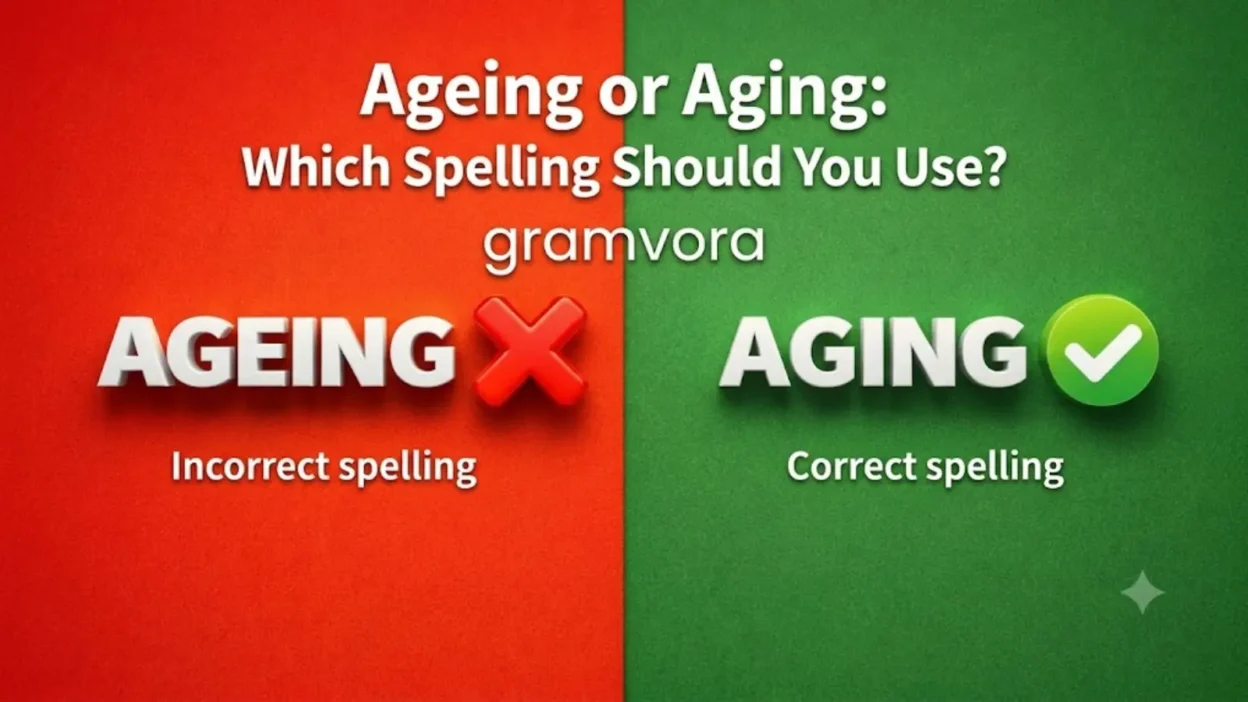
For a US audience, aging is the standard spelling. Ageing is mainly used in British English and some other non-US varieties. The two words mean the same thing, but they do not look equally natural to every audience.
That means this is not a meaning difference. It is a spelling and audience difference.
Quick Answer
Use aging in American English.
Use ageing if you are writing in British English or following a British-style publication.
Both forms can refer to the process of getting older, a person or thing that is becoming older, or the present participle of the verb age.
Examples:
- US: The report focuses on the aging population.
- UK: The report focuses on the ageing population.
- US: The bridge is aging quickly.
- UK: The bridge is ageing quickly.
For most US readers, aging looks normal. Ageing may look foreign, formal, or simply less familiar.
Why People Confuse Them
People confuse ageing and aging because both spellings appear in edited English.
The base word is age. In American spelling, the final e is usually dropped before adding -ing, so age becomes aging.
British English often uses ageing for this word, keeping the e. That is why readers may see ageing population, ageing process, or anti-ageing cream in British writing.
The pronunciation is the same: AY-jing. The spelling changes, but the sound does not.
Key Differences At A Glance
| Context | Best Choice | Why |
|---|---|---|
| American article, email, report, or school paper | aging | Standard US spelling |
| British article, report, or publication | ageing | Standard British spelling |
| Medical or scientific writing for US readers | aging | Common in American health and science contexts |
| UK public policy or demographic writing | ageing | Common in British-style official writing |
| Writing for mixed international readers | aging or ageing | Choose one style and stay consistent |
| Product phrase for a US audience | anti-aging | Normal US spelling |
| Product phrase for a British audience | anti-ageing | Normal British spelling |
Meaning and Usage Difference
Ageing and aging have the same meaning.
Both can describe:
- the process of becoming older
- a person, population, object, or system that is getting older
- the action of growing older over time
The difference is spelling preference.
Aging:
- Standard in US English
- Common in American health, science, business, and everyday writing
- Best for US readers
Ageing:
- Standard in British English
- Common in UK, Australian, and some other non-US writing
- Recognized by US readers but less common in American style
Compact comparison:
- Ageing: British spelling, same meaning, same pronunciation.
- Aging: American spelling, same meaning, same pronunciation.
- Best US choice: aging.
- Best UK choice: ageing.
- Main mistake: treating one as a different word with a different meaning.
Tone, Context, and Formality
Neither word is more formal by meaning.
The tone depends on the audience. In the United States, aging sounds natural in both formal and casual writing:
- an aging parent
- an aging workforce
- healthy aging
- aging infrastructure
In British-style writing, ageing sounds natural:
- an ageing population
- the ageing process
- ageing equipment
- healthy ageing
For US readers, ageing may look unusual, even though it is not wrong in British English. For British readers, aging is usually understood, but ageing may better match local spelling style.
Which One Should You Use?
Choose aging if your readers are mainly in the United States.
That applies to:
- school essays in US English
- American blog posts
- business reports for US companies
- healthcare content for US readers
- product copy aimed at US shoppers
Choose ageing if your readers expect British spelling.
That applies to:
- UK publications
- British-style academic writing
- Australian or New Zealand audiences
- documents that also use spellings like colour, organise, and centre
The safest rule is simple: match the spelling system used in the rest of your writing.
When One Choice Sounds Wrong
In American writing, ageing can distract the reader because it does not match standard US spelling.
Less natural for US readers:
- The city is replacing its ageing water lines.
- She studies healthy ageing.
- The company sells anti-ageing skin cream.
More natural for US readers:
- The city is replacing its aging water lines.
- She studies healthy aging.
- The company sells anti-aging skin cream.
In British-style writing, the opposite may be true. Aging is understandable, but ageing often looks more consistent with the surrounding style.
The choice sounds wrong when it clashes with the audience or with the spelling style used nearby.
Common Mistakes (and Quick Fixes)
One common mistake is using both spellings in the same article.
Wrong:
- The aging population needs better support for healthy ageing.
Better for US English:
- The aging population needs better support for healthy aging.
Better for British English:
- The ageing population needs better support for healthy ageing.
Another mistake is thinking the two words have different meanings.
Wrong idea:
- Aging means people get older, but ageing means objects get older.
Correct idea:
- Both can describe people, populations, objects, systems, or processes.
A third mistake is using aging where aged is needed.
Awkward:
- The study included adults aging 40 to 65.
Better:
- The study included adults aged 40 to 65.
That sentence is not really about ageing or aging. It needs aged because it gives the person’s age range.
Everyday Examples
Use aging for US English:
- My parents are aging, but they still travel often.
- The aging roof needs repairs before winter.
- Healthy aging starts with daily habits.
- The city is studying its aging public transit system.
- Her research focuses on aging and memory.
- The company updated its aging software.
- The clinic offers advice on aging well.
- An aging workforce can still bring deep experience.
Use ageing for British-style English:
- My parents are ageing, but they still travel often.
- The ageing roof needs repairs before winter.
- Healthy ageing starts with daily habits.
- The city is studying its ageing public transport system.
- Her research focuses on ageing and memory.
- The company updated its ageing software.
- The clinic offers advice on ageing well.
- An ageing workforce can still bring deep experience.
Dictionary-Style Word Details
Verb
- Ageing: Used as the present participle of age in British English. Example: The population is ageing quickly.
- Aging: Used as the present participle of age in American English. Example: The population is aging quickly.
Neither form is usually used as a standalone base verb. The base verb is age.
Noun
- Ageing: Used as a noun in British English to mean the process of becoming older. Example: The study looks at ageing and health.
- Aging: Used as a noun in American English to mean the process of becoming older. Example: The study looks at aging and health.
Both can also refer to controlled maturing in some contexts, such as food, wine, or materials. In US English, aging is the normal spelling for that use.
Synonyms
For both ageing and aging, the closest plain alternatives are:
- growing older
- getting older
- maturing
- becoming older
For objects or systems, possible alternatives include:
- wearing out
- deteriorating
- becoming outdated
These are not perfect replacements in every sentence. For example, maturing may sound positive, while deteriorating sounds negative.
Clear antonyms are limited. Depending on context, possible contrasts include:
- rejuvenation
- renewal
- becoming younger
Use those only when the sentence truly means moving toward youth, freshness, or repair.
Example Sentences
- Ageing: The article discussed the challenges of an ageing society.
- Aging: The article discussed the challenges of an aging society.
- Ageing: The lab studies how ageing affects the brain.
- Aging: The lab studies how aging affects the brain.
- Ageing: The council plans to repair ageing roads.
- Aging: The city plans to repair aging roads.
- Ageing: She writes about ageing with confidence.
- Aging: She writes about aging with confidence.
Word History
- Ageing: Formed from age plus -ing. This spelling keeps the final e and is standard in British English.
- Aging: Formed from age plus -ing. This spelling drops the final e and is standard in American English.
The important point is practical: modern references treat the spelling difference as regional, not as a difference in meaning.
Phrases Containing
- Ageing: ageing population, ageing process, ageing parent, ageing equipment, anti-ageing, ageing workforce
- Aging: aging population, aging process, aging parent, aging equipment, anti-aging, aging workforce
For US writing, use the aging version of these phrases. For British-style writing, use the ageing version.
Conclusion
For American readers, aging is the better choice. It is the standard US spelling in everyday, professional, medical, and academic contexts.
Ageing is also correct, but it belongs mainly to British-style English. It means the same thing and is pronounced the same way.
So the choice is not about meaning. It is about audience and spelling style.
Use aging for US English. Use ageing for British English. Most importantly, choose one spelling and keep it consistent.