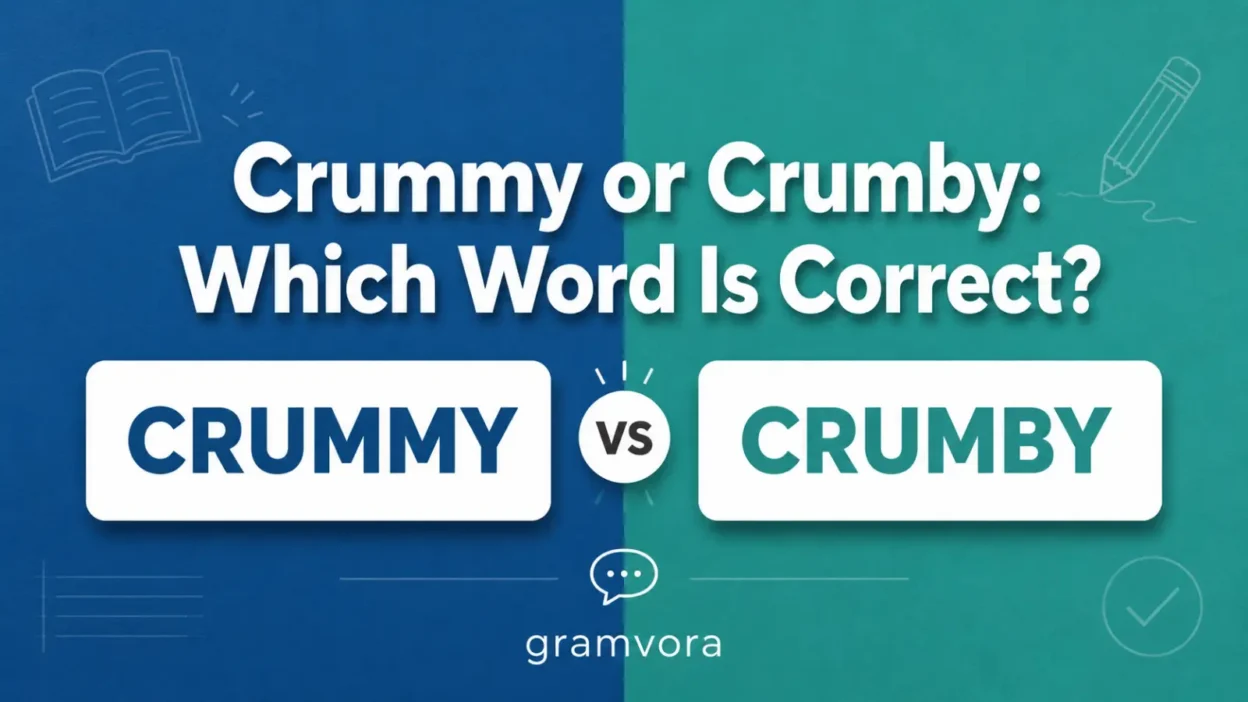
Crummy or crumby is confusing because the words sound the same and look almost the same. They also both connect in some way to the word crumb.
In modern American English, though, they usually do different jobs.
Use crummy when you mean bad, lousy, poor quality, unpleasant, or disappointing.
Use crumby when you mean full of crumbs, covered with crumbs, or crumb-like in texture.
So, a bad hotel is crummy. A table covered with cracker bits is crumby.
Quick Answer
Crummy is the word most people want when they mean “bad” or “lousy.”
Example:
I had a crummy day at work.
Crumby is the better word when crumbs are actually involved.
Example:
The toddler left the couch crumby after eating crackers.
They are not usually interchangeable in clear American writing. They may overlap in some dictionary entries and older or regional use, but the safest modern choice is simple: crummy = lousy and crumby = full of crumbs.
Why People Confuse Them
People confuse crummy and crumby for three main reasons.
First, they sound alike. The b in crumb is silent, so crumby is pronounced like crummy.
Second, both words look close. Only one letter changes.
Third, both words are connected to the idea of crumbs. That makes readers wonder whether crummy should mean “crumb-filled” too.
In everyday US writing, spelling matters here because readers expect different meanings from each form.
Key Differences At A Glance
| Context | Best Choice | Why |
|---|---|---|
| A bad day | crummy | It means lousy or unpleasant. |
| A poor-quality product | crummy | It describes something inferior or disappointing. |
| Feeling sick or unhappy | crummy | “Feel crummy” is a common informal phrase. |
| A table covered with crumbs | crumby | It means full of crumbs. |
| A crumb-covered shirt | crumby | It describes a physical mess. |
| A crumb-like food texture | crumby | It can describe texture related to crumbs. |
Meaning and Usage Difference
Crummy is an informal adjective. It describes something bad, poor, cheap, unpleasant, or disappointing.
You can use it for things, situations, moods, and health.
Examples:
The Wi-Fi at the hotel was crummy.
I felt crummy after the long flight.
That was a crummy excuse.
Crumby is also an adjective, but it is more literal. It describes something with crumbs on it or something that resembles crumbs.
Examples:
The kitchen floor was crumby after breakfast.
His hoodie was crumby from the muffin.
The topping had a dry, crumby texture.
Compact comparison:
• Crummy: bad, lousy, poor, unpleasant
• Crumby: full of crumbs, covered in crumbs, crumb-like
• Crummy: common in casual speech
• Crumby: less common and more specific
• Crummy: judgment or feeling
• Crumby: physical detail or texture
Tone, Context, and Formality
Crummy is casual. It is fine in conversation, blog writing, personal emails, reviews, and simple explanations. It may sound too relaxed for formal reports or serious academic writing.
Instead of crummy, formal writing may use poor, inferior, substandard, or unpleasant.
Example:
Casual: The apartment had crummy heating.
More formal: The apartment had poor heating.
Crumby is also casual, but it is not as common. It sounds natural when crumbs are clearly part of the sentence.
Example:
The back seat was crumby after the kids ate granola bars.
Because crumby is less common, some readers may pause when they see it. Still, it is useful when you want a direct crumb-related adjective.
Which One Should You Use?
Choose crummy when you are judging quality.
Use it for a bad movie, a weak excuse, a cheap product, a rough day, or an unpleasant feeling.
Examples:
That was a crummy movie.
She felt crummy about missing the meeting.
The restaurant gave us crummy service.
Choose crumby when the sentence is about actual crumbs.
Examples:
The counter was crumby.
My bagel left the desk crumby.
The pie crust had a crumby edge.
A simple test helps:
Can you replace the word with lousy? Use crummy.
Can you replace it with covered in crumbs? Use crumby.
When One Choice Sounds Wrong
Some sentences become unclear when the wrong word is used.
Wrong: I had a crumby day.
Better: I had a crummy day.
A day is not covered in crumbs. The writer means the day was bad.
Wrong: The baby left the high chair crummy.
Better: The baby left the high chair crumby.
The high chair may not be poor quality. It is probably covered with crumbs.
Wrong: That was a crumby excuse.
Better: That was a crummy excuse.
An excuse can be weak or lousy, not crumb-covered.
Wrong: The cookie tray was crummy after lunch.
Better: The cookie tray was crumby after lunch.
If crumbs are the point, crumby is clearer.
Common Mistakes (and Quick Fixes)
One common mistake is using crumby for anything bad.
Weak: This phone is crumby.
Clear: This phone is crummy.
Another mistake is using crummy when describing a mess made of crumbs.
Weak: The sofa was crummy after snack time.
Clear: The sofa was crumby after snack time.
A third mistake is assuming crumby is just a misspelling. It is a real word, but it has a narrower use in modern American English.
A final mistake is using either word in very formal writing. In a serious report, poor, low-quality, or substandard may fit better than crummy. For crumby, a phrase like covered with crumbs may be clearer.
Everyday Examples
I skipped the crummy coffee in the break room.
The team had a crummy first half but played better later.
He felt crummy after sleeping only three hours.
That was a crummy way to treat a customer.
The picnic blanket was crumby after lunch.
She wiped the crumby counter with a damp cloth.
The back seat looked crumby after the road trip.
The muffin topping was sweet, dry, and crumby.
The word changes the meaning. Crummy coffee means bad coffee. A crumby coffee table means a table with crumbs on it.
Dictionary-Style Word Details
Verb
Crummy: Not commonly used as a verb in standard US English.
Crumby: Not commonly used as a verb in standard US English.
Use crumble when you need a verb about breaking into crumbs.
Example:
The cookie started to crumble.
Noun
Crummy: In everyday US writing, crummy is usually not a noun. Some dictionaries record rare or specialized noun uses, but those are not the normal meaning in this comparison.
Crumby: Not commonly used as a noun in standard US English.
For normal writing, treat both words as adjectives.
Synonyms
Crummy: closest plain alternatives include bad, lousy, poor, cheap, inferior, unpleasant, and disappointing.
Possible opposites include good, excellent, high-quality, and pleasant.
Crumby: closest plain alternatives include crumb-covered, full of crumbs, crumb-like, and sometimes crumbly, depending on the sentence.
A clear opposite is not always natural. If needed, use a phrase such as clean, crumb-free, or smooth, depending on the context.
Example Sentences
Crummy:
The motel looked crummy from the outside.
I felt crummy after eating too much junk food.
They offered a crummy deal, so we walked away.
Her old laptop has a crummy battery.
Crumby:
The floor was crumby under the kids’ chairs.
His jacket sleeve was crumby after he ate the pastry.
The cutting board stayed crumby until I rinsed it.
The topping should be dry and crumby, not wet.
Word History
Crummy: The word has older crumb-related connections, but in modern everyday use it is strongly associated with the informal meaning “bad” or “lousy.”
Crumby: This form keeps the crumb-related meaning more clearly in current American writing.
The history is connected, but the modern choice is based on meaning: use crummy for poor quality and crumby for crumbs.
Phrases Containing
Crummy:
feel crummy
a crummy day
a crummy job
crummy weather
a crummy excuse
crummy service
Crumby:
a crumby counter
a crumby table
a crumby floor
a crumby shirt
a crumby texture
crumby bits
FAQs
Is it crummy or crumby?
Use crummy when you mean bad, lousy, poor quality, or unpleasant. Use crumby when you mean full of crumbs, covered with crumbs, or crumb-like in texture.
Example:
The hotel was crummy.
The kitchen counter was crumby.
Is crumby a real word?
Yes, crumby is a real word. In modern American English, it usually means covered with crumbs or full of crumbs. It is less common than crummy.
What does crummy mean?
Crummy means bad, lousy, poor, unpleasant, or disappointing. It is informal and common in everyday speech.
Example:
I had a crummy day.
What does crumby mean?
Crumby means full of crumbs, covered in crumbs, or having a crumb-like texture.
Example:
The sofa was crumby after the kids ate crackers.
Can crumby mean bad?
Some dictionaries record crumby as a variant of crummy, but in clear modern American writing, crummy is the better choice for “bad” or “lousy.”
Better:
That was a crummy excuse.
Is crummy informal?
Yes, crummy is informal. It works well in casual writing and conversation, but in formal writing, words like poor, inferior, low-quality, or unpleasant may sound better.
Do crummy and crumby sound the same?
Yes. Crummy and crumby are usually pronounced the same because the b in crumb is silent. That is one reason people confuse them.
Which word should I use for food crumbs?
Use crumby when actual crumbs are involved.
Example:
The table was crumby after breakfast.
Which word should I use for a bad experience?
Use crummy for a bad experience.
Example:
We had crummy service at the restaurant.
Is “I feel crumby” correct?
The better modern spelling is I feel crummy. That means you feel sick, tired, sad, or generally bad.
Is “crumby table” correct?
Yes, if the table is covered with crumbs. But if you mean the table is cheap, ugly, or poor quality, use crummy table instead.
What is the easiest way to remember the difference?
Use crummy for lousy. Use crumby for crumbs.
Crummy day = bad day.
Crumby plate = plate with crumbs.
Conclusion
The choice between crummy or crumby is easy once you focus on meaning.
Use crummy for something bad, lousy, poor quality, unpleasant, or disappointing.
Use crumby for something full of crumbs, covered with crumbs, or crumb-like in texture.
For most modern American sentences, crummy is the common word for “bad,” while crumby is the crumb-related word.