Immediate family and extended family are both correct expressions, but they describe different ranges of family relationships.
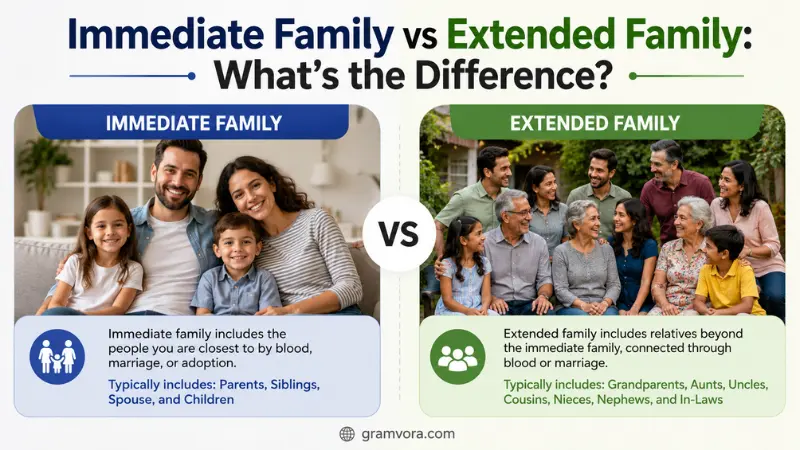
In ordinary American English, immediate family usually means the people in your closest family group, such as your spouse, parents, siblings, and children. Extended family reaches beyond that core group and commonly includes relatives such as grandparents, aunts, uncles, cousins, nieces, and nephews.
The boundary is not identical in every situation, though. A workplace, insurance policy, government rule, or other formal document may provide its own definition of who counts as immediate family. In those situations, the written definition controls how the term is being used.
Quick Answer
Use immediate family when you mean your closest core family members. Use extended family when you mean the wider group of relatives beyond that core.
For example, your spouse and children would normally be described as immediate family. Your cousins, aunts, and uncles would normally be extended family.
Both phrases are correct. The right choice depends on which relatives you mean and whether a specific policy defines the category differently.
Why People Confuse Them
The confusion comes from the fact that family relationships do not always fit neatly into one fixed list.
A grandparent may be one of the closest people in someone’s life, while a sibling may live thousands of miles away. Emotional closeness, however, does not automatically determine which English term applies.
Living arrangements can also blur the distinction. A person may share a home with a grandparent, cousin, or aunt. That person can still be described as part of the extended family in everyday conversation.
Formal definitions create another source of confusion. A rule may include grandparents, in-laws, step-relatives, or other people within its definition of immediate family. That does not mean every speaker must use the term that way in ordinary conversation.
Extended Family vs Immediate Family

The main difference between extended family and immediate family is how closely the relatives are connected to you. Immediate family usually refers to your closest family members, such as your parents, children, siblings, and spouse. Extended family refers to relatives outside this closest group, including grandparents, grandchildren, aunts, uncles, nieces, nephews, and cousins.
For example, if you live with your spouse and children, they are generally part of your immediate family. Your parents and siblings are also commonly included in the immediate family. Your grandparents, cousins, aunts, and uncles are usually considered extended family.
| Family Type | Common Members | Example |
|---|---|---|
| Immediate Family | Parents, children, siblings, spouse | Your mother, father, brother, sister, spouse, or child |
| Extended Family | Grandparents, grandchildren, aunts, uncles, cousins, nieces, nephews | Your grandmother, uncle, aunt, or cousin |
The distinction can vary depending on the situation. In everyday conversation, people often use immediate family for their closest relatives and extended family for the wider family network. However, workplaces, schools, insurance policies, government agencies, and legal documents may define these terms differently.
Simple Example
Suppose Sarah is married and has two children.
In short, immediate family means your closest family circle, while extended family includes relatives beyond that circle.
Key Differences At A Glance
- Immediate family: the closest or core family group; commonly includes a spouse, parents, siblings, and children.
- Extended family: the wider family network beyond the core group; commonly includes grandparents, aunts, uncles, cousins, nieces, nephews, and other relatives.
- Main difference: immediate family is narrower; extended family is broader.
- Formality: both are standard, neutral expressions.
- Important exception: a formal policy or rule may define either category for its own purpose.
Meaning and Usage Difference
The word immediate has a sense of being nearest or closest. In immediate family, it refers to family relationships viewed as belonging to the closest family circle.
That is why sentences such as “Only immediate family attended the small ceremony” usually suggest a limited group rather than every aunt, uncle, cousin, and distant relative.
Extended means broadened or reaching farther. An extended family therefore reaches beyond the basic core family group.
If someone says, “We invited the extended family for Thanksgiving,” the listener will normally expect a larger gathering that may include grandparents, cousins, aunts, uncles, and similar relatives.
There is one useful nuance. Extended family can sometimes describe the entire larger family structure, including the core family plus additional relatives. In everyday conversation, however, people also use “my extended family” to refer specifically to relatives outside their immediate family.
Both expressions function as noun phrases. They name groups of people rather than actions.
Tone, Context, and Formality
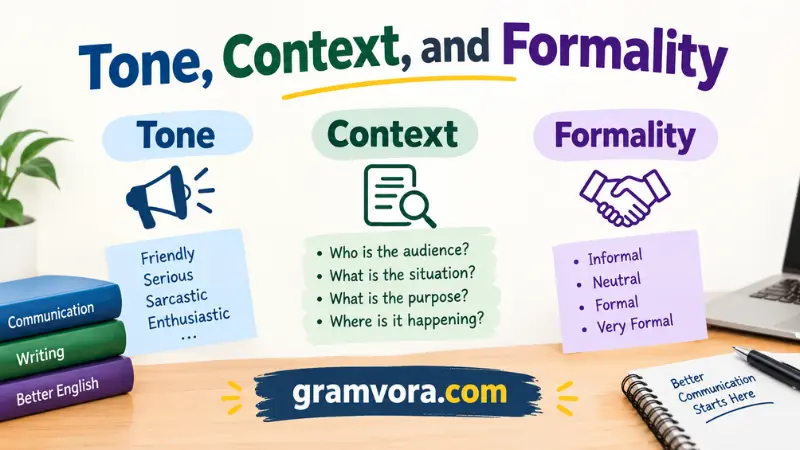
Neither expression is especially formal or informal. Both work naturally in conversation, news writing, workplace communication, school writing, and official documents.
The difference is mainly one of meaning and context.
Immediate family often appears when a boundary matters. You may see it in invitations, hospital rules, leave policies, benefit documents, or sentences explaining who was present at a private event.
Extended family is especially natural when discussing family reunions, holiday gatherings, family networks, relatives living in different places, or larger multigenerational families.
In American English, the two phrases do not have a meaningful pronunciation difference that helps with word choice, so pronunciation does not need to guide the decision.
Which One Should You Use?
Use the phrase that matches the size and type of family group you actually mean.
| Context | Best Choice | Why |
|---|---|---|
| Your spouse, parents, siblings, or children | Immediate family | These relationships normally belong to the closest family group |
| Aunts, uncles, and cousins | Extended family | They normally fall outside the core family group |
| A large family reunion | Extended family | The event usually brings together relatives from several branches or generations |
| A private event limited to the closest relatives | Immediate family | The phrase signals a smaller family circle |
| A workplace or benefits form | Use the term defined by the policy | Formal definitions may differ from everyday usage |
| A multigenerational family network | Extended family | The phrase can describe a family structure reaching beyond the core unit |
If you are simply writing about your relatives in everyday English, the core-versus-wider-family distinction is usually enough.
If money, leave, eligibility, insurance, legal rights, or another formal rule is involved, check the definition supplied in the document rather than relying only on conversational usage.
When One Choice Sounds Wrong
Using extended family for only your spouse and children can sound unnecessarily broad.
For example, “My extended family consists of my wife and two children” would usually sound odd if no other relatives are included. My immediate family would be the more natural choice.
The reverse problem occurs when someone describes several cousins, aunts, and uncles as immediate family without any special context.
“I invited 14 cousins from my immediate family” would normally sound incorrect or confusing. In everyday English, extended family is the expected phrase for cousins.
There are exceptions when a policy defines immediate family broadly. In that case, a relative who would normally be called extended family in casual conversation may still qualify as immediate family for that particular rule.
Common Mistakes (and Quick Fixes)
One common mistake is assuming immediate family means whoever you love most. The expression usually describes a relationship category, not a ranking of affection.
Another mistake is believing that everyone who lives in your house becomes immediate family. Household membership and family category can overlap, but they are not automatically identical.
Writers also sometimes assume that grandparents must always be extended family. In ordinary conversation, describing grandparents as extended family is normal. However, a specific workplace or formal policy may include grandparents within its own definition of immediate family.
The same warning applies to in-laws, step-relatives, domestic partners, guardians, and other relationships. Their status can depend on context.
Finally, do not assume that extended family means distant family. Your grandmother may be part of your extended family while still being emotionally very close to you.
Everyday Examples
“We’re keeping the courthouse ceremony to immediate family.”
“Most of my extended family lives in Texas, but my parents live nearby.”
“After the accident, Maya called her immediate family first.”
“Our extended family gets together every summer for a reunion.”
“The restaurant table was large enough for our immediate family, but not all of our cousins and aunts.”
“His extended family came from several states for Thanksgiving.”
“The employee handbook explains which relatives count as immediate family for leave purposes.”
“She grew up in a home where several members of her extended family lived together.”
“We invited immediate family to dinner Friday and the extended family to the larger party Saturday.”
“My cousin is part of my extended family, even though we grew up together and are very close.”
Dictionary-Style Word Details
Verb
Immediate family: Not commonly used as a verb in standard American English. The expression is a noun phrase.
Extended family: Not commonly used as a verb. It is also a noun phrase.
The word extended can be a verb form in other sentences, such as “They extended the deadline,” but that is a different grammatical use from extended family.
Noun
Immediate family: A collective noun phrase referring to a person’s closest family group. In everyday use, this commonly includes a spouse, parents, siblings, and children.
Example: “Her immediate family lives nearby.”
Extended family: A collective noun phrase referring to a wider family group that reaches beyond the core family unit.
Example: “His extended family gathered for the reunion.”
In ordinary American usage, family often takes a singular verb when the group is treated as one unit: “My immediate family is coming.”
Synonyms
Neither phrase has a perfect substitute that works in every sentence.
Immediate family — closest plain alternatives: close family, closest relatives, core family members.
These alternatives can be useful in casual writing, but they may not carry the same defined meaning in a workplace or formal document.
Extended family — closest plain alternatives: wider family, relatives, wider family circle, kin.
Again, these are near alternatives rather than exact replacements in every context.
The two expressions should not be treated as perfect antonyms. Extended family can describe a larger family structure that contains the core family as well as additional relatives.
Example Sentences
Immediate family: “Only immediate family knew about the announcement before Friday.”
Extended family: “We rented a larger house so the extended family could stay together during the holiday.”
Immediate family: “Her immediate family includes her husband, two children, parents, and brother.”
Extended family: “Several members of his extended family traveled across the country for the graduation.”
Word History
Both expressions are straightforward combinations of familiar English words.
In immediate family, immediate carries the idea of being nearest or closest in relationship.
In extended family, extended signals that the family group reaches beyond a smaller core.
The historical development of these expressions does not create a special modern usage rule. For present-day word choice, the important distinction is the narrower family circle versus the broader family network.
Phrases Containing
Common expressions with immediate family include immediate family member, immediate family members, and immediate family only.
Example: “The invitation is for immediate family only.”
Common expressions with extended family include extended family member, extended family members, extended family gathering, and extended family network.
Example: “The reunion brought together extended family members from across the country.”
FAQs
What is the main difference between immediate family and extended family?
Immediate family usually means your closest family group, such as your spouse, parents, siblings, and children. Extended family includes the wider family circle, such as grandparents, aunts, uncles, cousins, nieces, and nephews.
Who is considered immediate family?
In everyday American English, immediate family commonly includes a spouse, parents, children, and siblings. However, workplaces, government rules, insurance policies, and other formal documents may use their own definitions.
Are grandparents immediate family or extended family?
Grandparents are usually considered extended family in everyday usage. However, some workplace policies or formal rules may specifically include grandparents within their definition of immediate family.
Are cousins part of immediate family?
Cousins are generally considered extended family rather than immediate family. Even if you are very close to a cousin, the relationship normally belongs to the wider family group.
Are aunts and uncles extended family?
Yes. Aunts and uncles are normally considered members of your extended family because they fall outside the closest core family group.
Are in-laws immediate or extended family?
It depends on the relationship and context. A spouse is normally immediate family, while other in-laws may be treated as extended family in everyday conversation. Formal policies may define in-laws differently.
Can immediate family and extended family live in the same house?
Yes. Living together does not automatically change a person’s family category. A grandparent, aunt, uncle, or cousin may live in the same household while still being described as extended family.
Conclusion
Both immediate family and extended family are correct, but they are not interchangeable.
Use immediate family for the closest core family group, commonly including a spouse, parents, siblings, and children. Use extended family for the wider network of relatives, commonly including grandparents, aunts, uncles, cousins, nieces, nephews, and other relatives beyond that core.
The main exception comes when a workplace, government rule, insurance document, or other formal policy supplies its own definition. In that situation, follow the definition given for that specific purpose.
For ordinary conversation and general writing, remember the simplest distinction: immediate family is the narrower circle; extended family is the wider circle.